CVS Health’s decision to split into two public companies marks a sharp reversal of the strategy that shaped the group for years. CVS kept adding more of the healthcare chain to the same corporate structure: Aetna, Caremark, retail pharmacy and care delivery.
The November 4 split shows where that logic starts to weaken. CVS is keeping parts of the model together, but it is no longer treating maximum integration as an advantage in itself.
That makes the breakup more than a restructuring story. It raises a broader question for healthcare conglomerates: at what point does owning more of the value chain stop improving the economics and start making the business harder to manage?
The Structural Friction of Integrated Margins
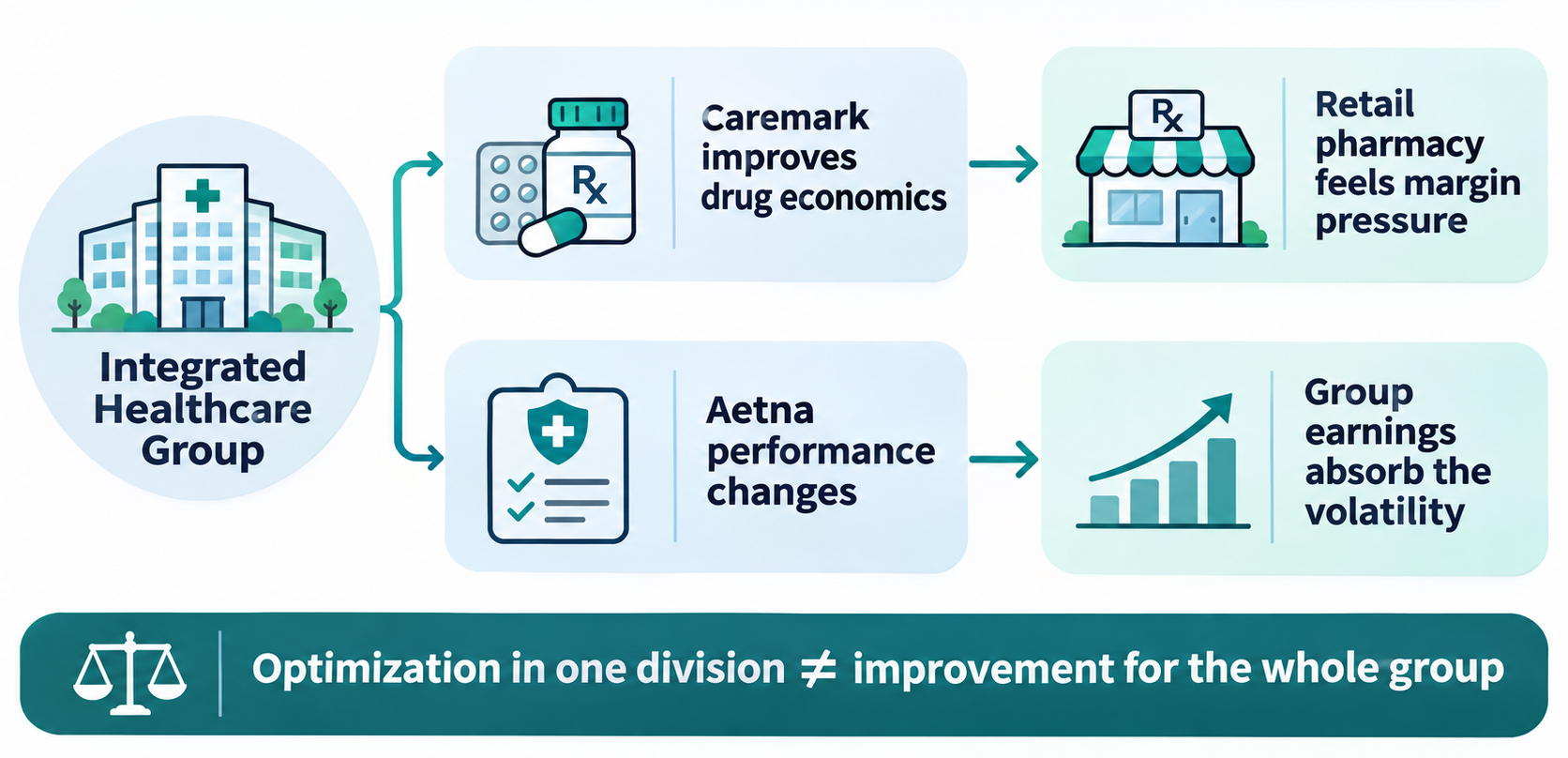
The pressure inside an integrated healthcare group shows up when one part of the business improves its economics at another’s expense. CVS can negotiate harder on drug costs through Caremark, but the same pressure runs through a retail network that still depends on prescription economics across thousands of locations.
Aetna adds another layer of volatility. More than 81% of its Medicare Advantage members were in plans rated four stars or higher for 2026.[1] For 2027, that share falls to 69%, reducing access to the quality bonuses that support Medicare Advantage profitability.[2]
The strain appears when stronger economics in one division fail to carry through to the group as a whole. CVS can improve one part of the model and still see the benefit absorbed elsewhere.
Refinancing Walls and Capital Allocation Costs
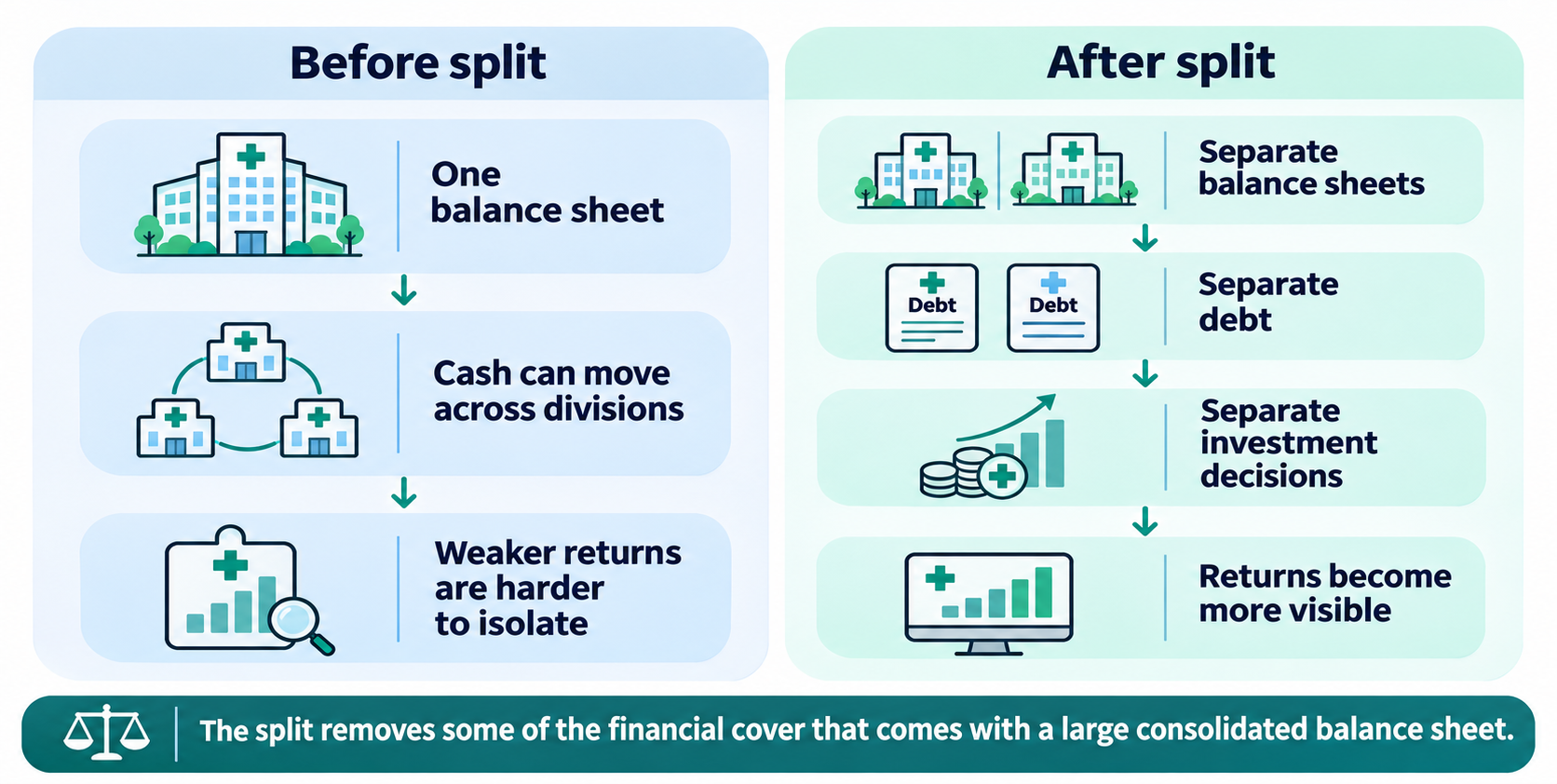
The split also removes some of the financial shelter that comes with a large corporate balance sheet. Inside CVS, cash generated in one part of the group can support investment elsewhere, even when the returns are difficult for investors to separate. Once the businesses stand alone, that becomes much harder.
CVS says both companies will have independent capital structures and their own flexibility over strategic capital deployment.[3] That gives each management team more freedom, but it also makes the economics more visible. Debt, investment and free cash flow will have to be justified against the performance of that business rather than absorbed into the wider group.
That matters more in an era of higher capital costs. Cheap financing gave conglomerates more room to carry uneven returns for longer. Expensive capital narrows that tolerance. The pressure is not necessarily a refinancing crisis. It is the loss of financial cover for investments that no longer earn enough to defend their place inside the portfolio.
The Strategic Autopsy of Scale
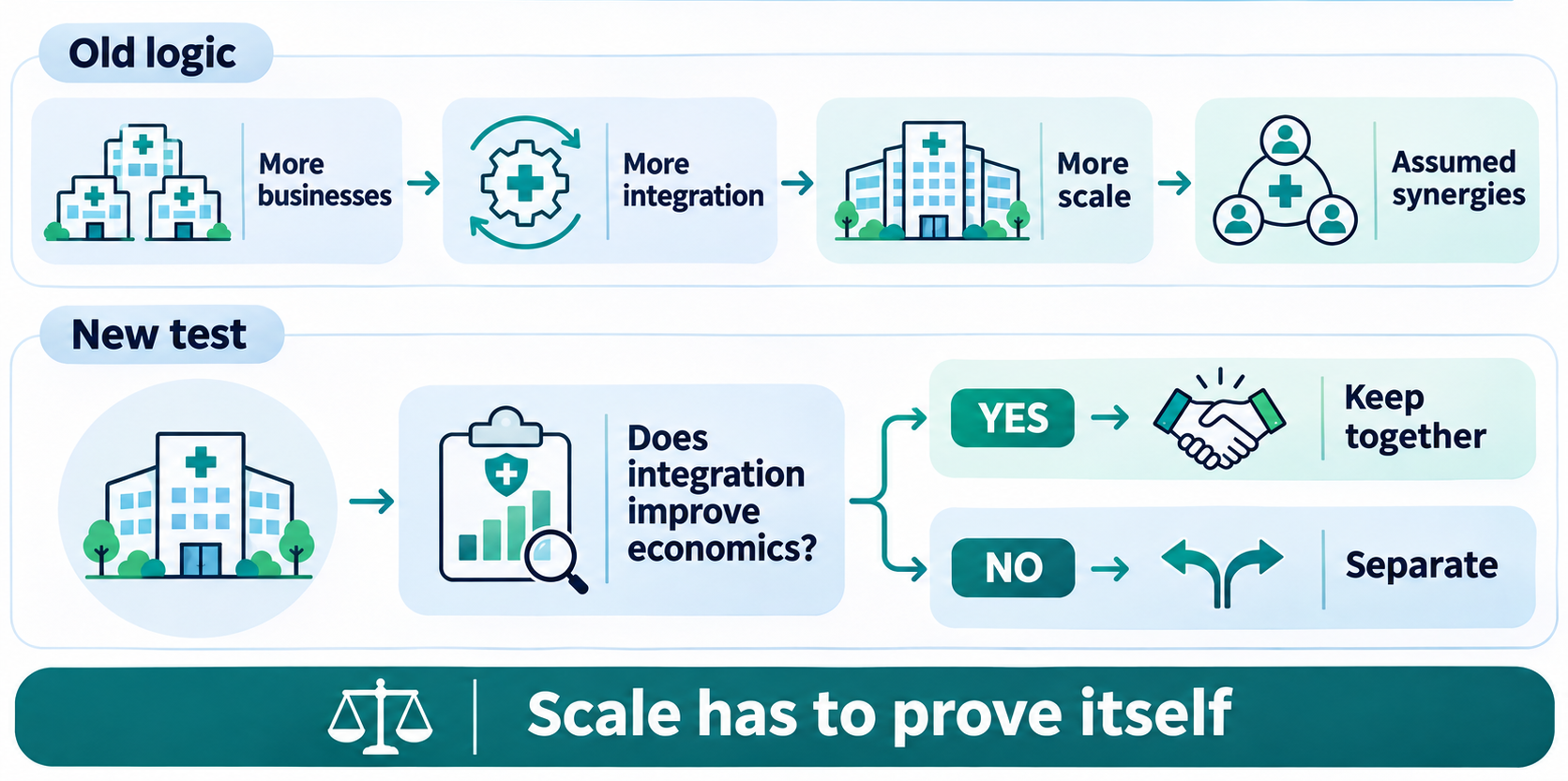
The CVS breakup may matter most for what comes next. For years, healthcare deals were often justified by the assumption that owning more of the chain would eventually produce stronger economics.
That assumption is becoming harder to defend on its own. Future deals will have to show much more clearly where the financial benefit of integration actually appears and whether it survives once the businesses are run together.
Investors may become less interested in scale as a story and more interested in whether the pieces actually reinforce each other. That is a tougher test for healthcare conglomerates with different regulators, investment needs and profit structures under one roof. CVS is effectively testing a narrower version of the integrated model: keep the connections that still improve the economics, and separate the ones that make those economics harder to see.
Sources: