Schneider Electric’s $22.6 billion acquisition of PTC is more than a large expansion of its industrial software portfolio. The French group is offering $205 per share, a 42.3% premium to PTC’s last closing price, in a deal that sent Schneider’s shares down about 10% as investors questioned the valuation and execution risk.[1]
The size of the premium points to a broader change in what industrial companies are willing to pay for. PTC brings a business built around software, recurring revenue and long-term customer relationships rather than individual equipment orders. Schneider expects Software & Services to account for about 24% of group revenue on a pro forma basis after the transaction.
That does not remove industrial cyclicality. But it gives Schneider a larger stream of revenue that is less dependent on the timing of the next factory expansion, equipment replacement or major capital project.
When Equipment Revenue Depends on the Next Capex Decision
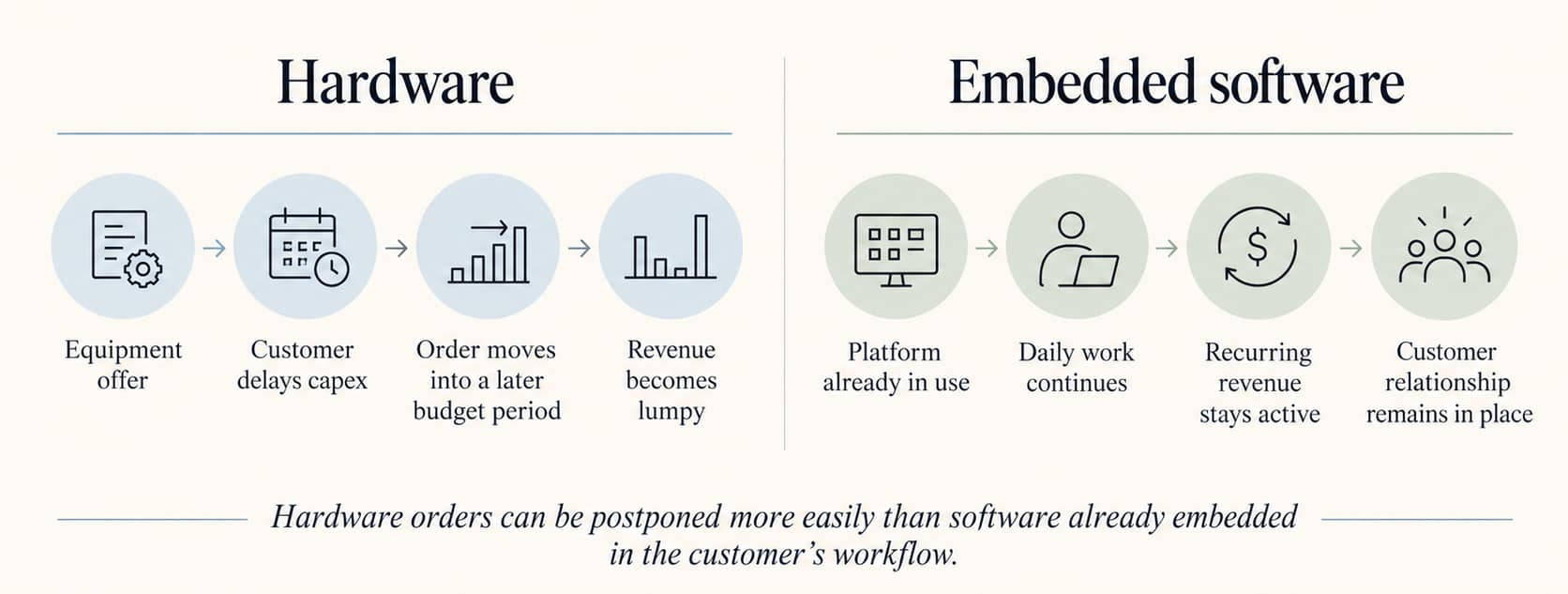
The problem with industrial hardware is not that demand disappears when financing gets tighter. It is that timing starts to matter much more. A factory can keep running with older equipment, stretch an upgrade cycle or move a planned automation project into the next budget period. That flexibility becomes more attractive when borrowing costs stay elevated. In the second quarter of 2026, a net 42% of euro-area firms reported higher bank lending rates.[2]
That is where higher capital costs begin to reshape the revenue profile of industrial suppliers. A delayed project can shift a large order out of the quarter entirely.
Software is harder to separate from work that is already underway. Once design tools, lifecycle systems and operating platforms are embedded across teams, replacing them is not simply another procurement decision. It touches the processes already supporting the plant. For Schneider, that makes software valuable for a reason beyond margin: it keeps part of the customer relationship intact while the next physical investment can still be postponed.
From Product Sales to Lifecycle Control
PTC expands Schneider’s reach into decisions that happen before equipment is ordered. Its CAD and product lifecycle software sit closer to the engineering stage, where companies define how products, plants and industrial systems will be built. Schneider already has a strong position further downstream through automation, energy management and AVEVA’s operating software.
Bringing those layers together changes where the group can compete. Instead of entering only when a customer is ready to buy hardware, Schneider can participate earlier in the design process and remain involved after the asset moves into operation. That creates more points where software, services and physical equipment can be sold around the same industrial system.
The value is not only in keeping customers inside one platform. It is in controlling more of the commercial journey around the asset itself. The closer Schneider gets to both the design decision and the operating data, the more opportunities it has to shape what gets specified, upgraded and serviced later.
The Return Test Behind the Premium
The next question is whether Schneider can turn that wider commercial position into returns high enough to justify the price. The company is valuing PTC at 21 times estimated 2027 adjusted EBITA before synergies, a level that puts considerable pressure on execution from the start.
Schneider’s model depends on more than extracting costs. It expects about €250 million in annual savings, but the larger prize is roughly €800 million in additional revenue opportunities created by selling across a broader installed base and combining the two software portfolios.
That makes the acquisition a test of capital allocation as much as industrial strategy. Schneider is paying today for earnings that still have to be created inside the combined business. Management expects the transaction to be immediately accretive to adjusted EPS and for return on capital to move above the group’s cost of capital by the fifth year after closing.
The New Perimeter of Industrial Capital
The Schneider-PTC deal also says something about where industrial companies may look for growth next. Building another factory or adding another product line is no longer the only way to increase the value of an industrial business. More of that value can now sit in the software and data systems around the physical operation.
This changes what becomes attractive in the next round of industrial M&A. Large groups may spend less of their acquisition budgets simply adding manufacturing capacity and more on businesses that give them access to the information, software and operating systems already used by industrial customers.
Schneider is making that bet at considerable cost. If it works, the deal may become part of a wider pattern: industrial groups using software acquisitions to build businesses that extend well beyond the equipment they manufacture. The next competitive divide may not be between hardware and software companies at all, but between manufacturers that can combine the two and those that remain dependent on the next physical order.
Sources: