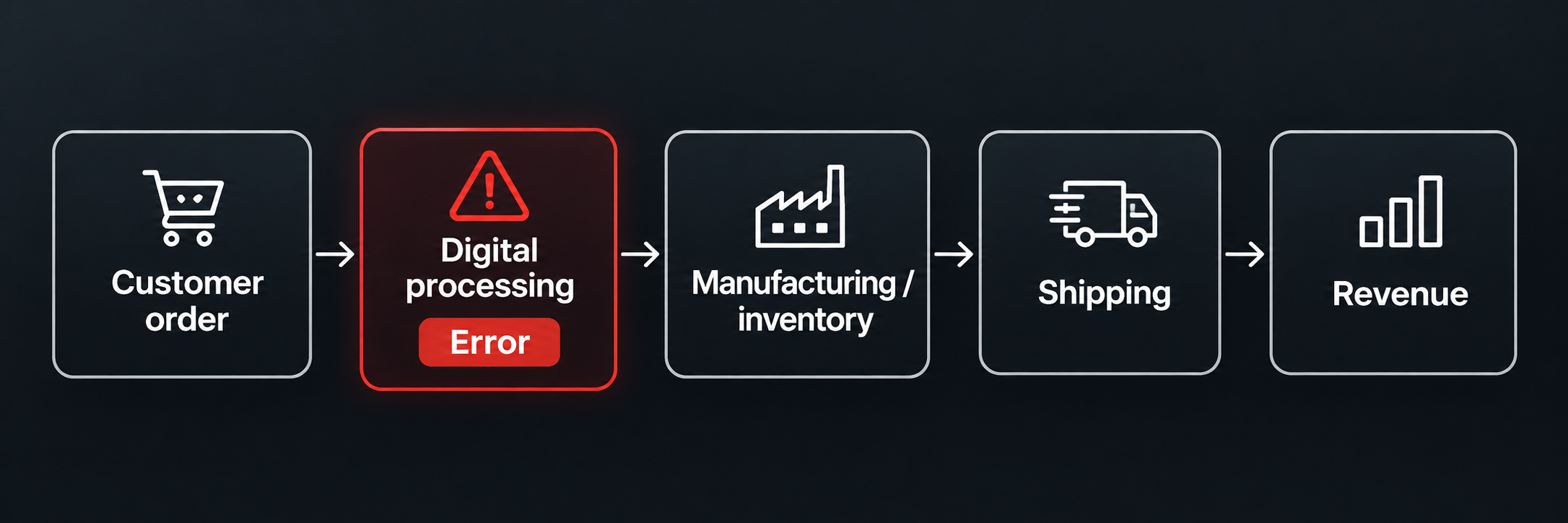
Boston Scientific detected a cyber incident on August 25 that disrupted systems used to process and ship customer orders [1]. What began as a digital failure quickly moved into the company’s physical operations.
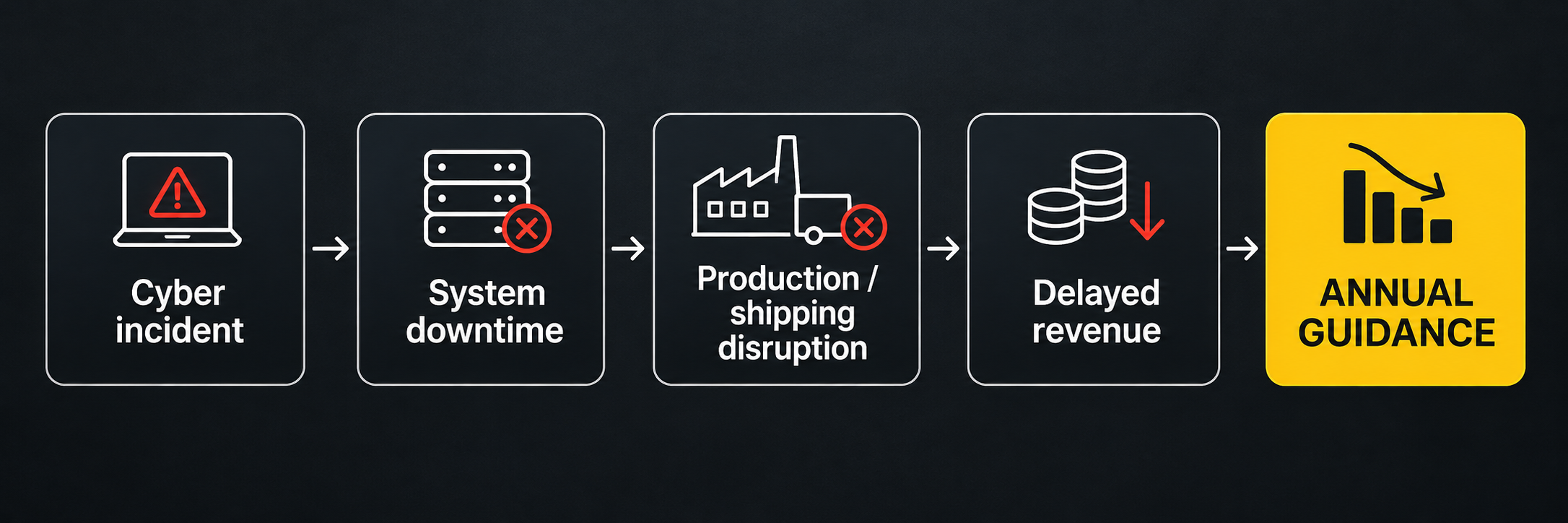
By September 8, Boston Scientific said the disruption had affected manufacturing, processing and shipping, and that it was unlikely to meet its previously issued full-year 2026 sales growth and adjusted EPS guidance [2].
The significance goes beyond the incident itself. For a modern manufacturer, cybersecurity no longer protects only information. It protects the entire velocity of the business. Once that chain depends on shared digital systems, a cyberattack can translate directly into lost output, delayed revenue and a weaker financial year.
When IT Failure Reaches the Factory
A factory no longer operates as an isolated physical system. Floor operations, backlog management and logistics are coordinated through digital infrastructure that connects what happens on the factory floor with what happens across the rest of the business.
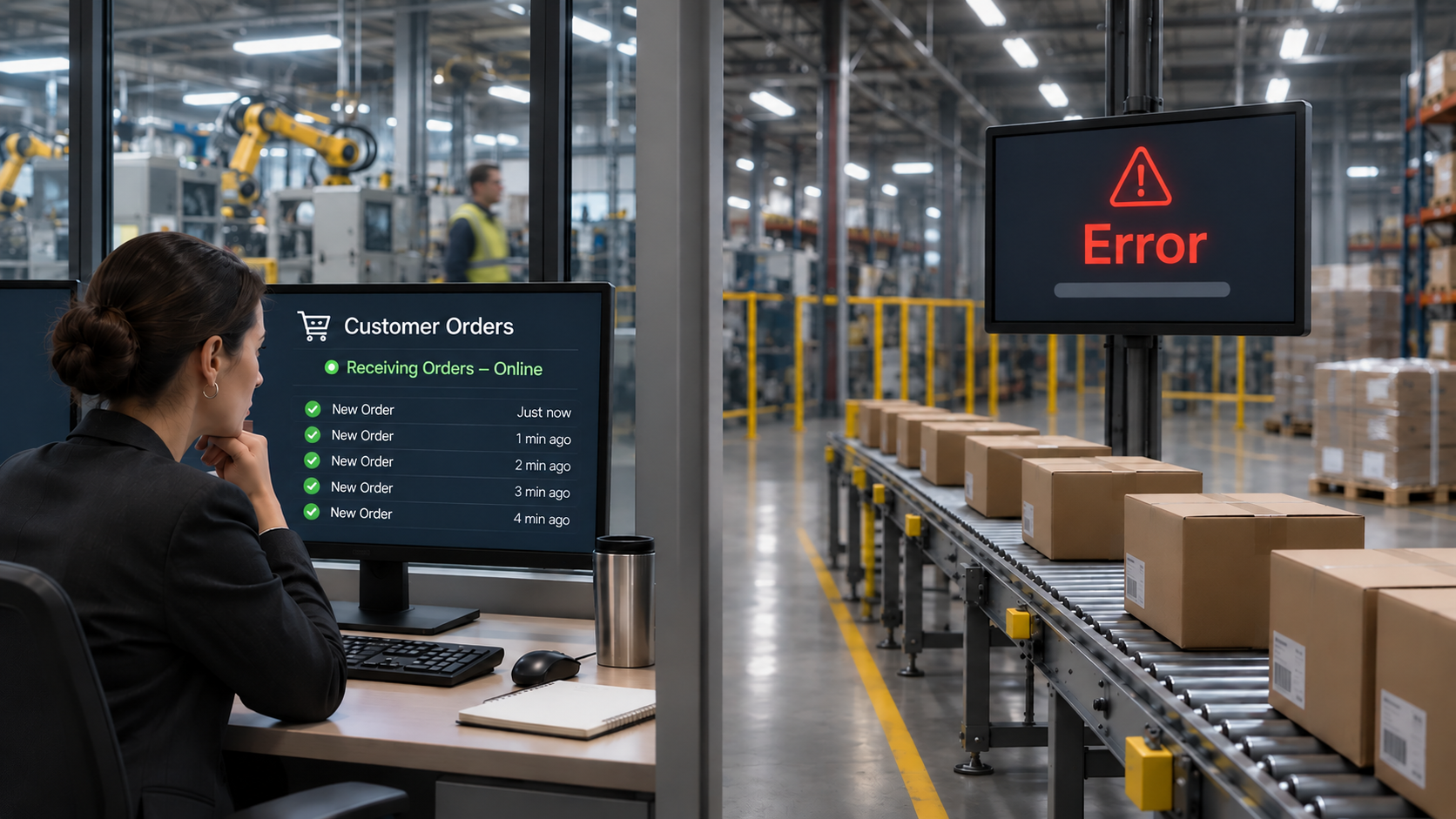
Boston Scientific exposed how fragile that coordination can become. During the disruption, the company said it could continue receiving customer orders electronically, but was unable to process or ship them normally, leaving orders queued until systems were restored [3]. The products had not disappeared, and the physical distribution network had not ceased to exist. What failed was the digital layer that allowed those assets to function as one operating system.
That distinction is becoming more important across industrial companies. A warehouse full of finished goods has limited value if software cannot release them into distribution. A production line can remain mechanically available while the surrounding workflow needed to schedule, verify or move output is unavailable.
The boundary between information systems and industrial operations is therefore becoming less useful as a way to think about risk. What matters is whether the full chain can keep functioning when one digital layer fails.
Cyber Resilience Becomes an Operating Metric
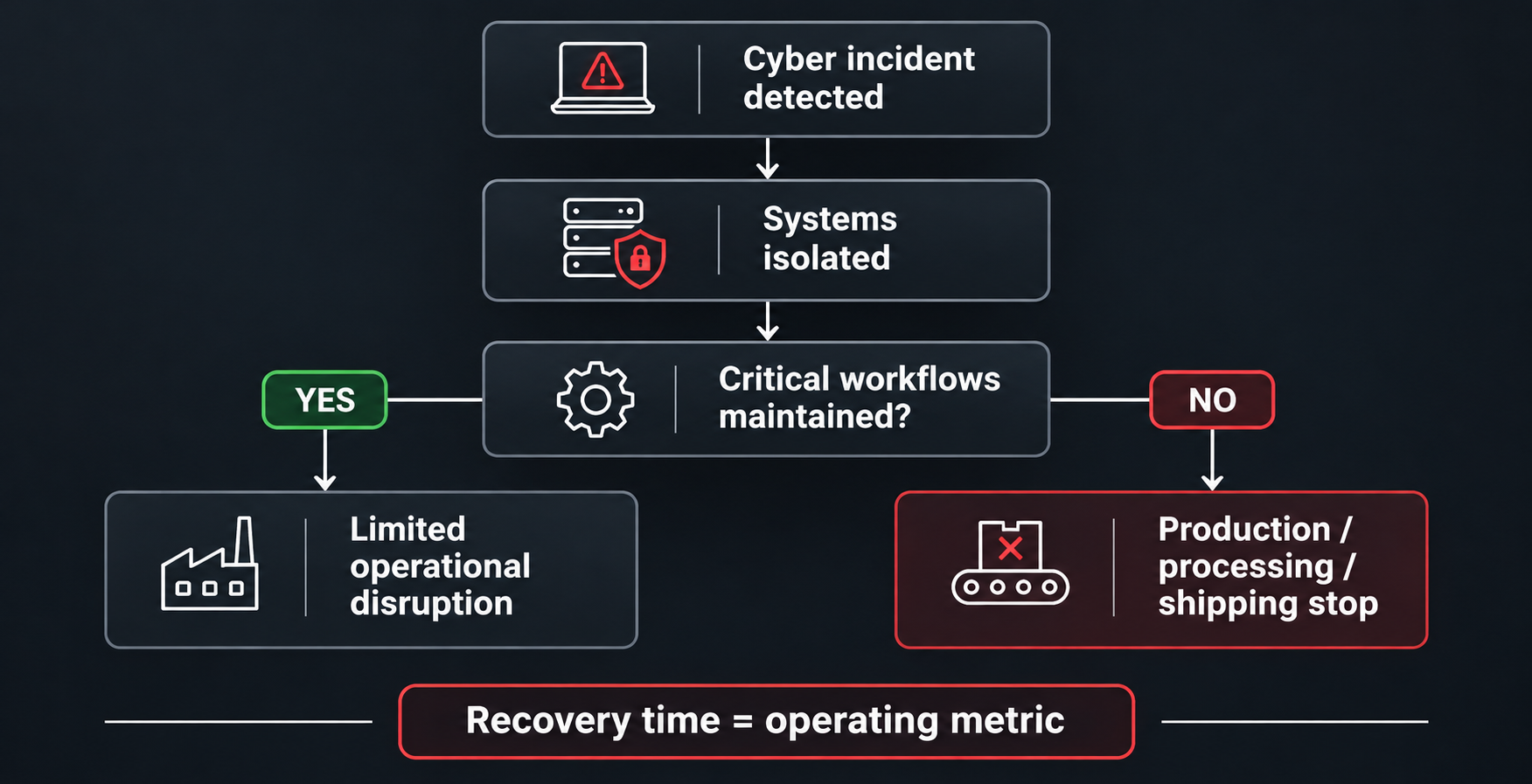
The harder problem begins after an attack is detected. Security teams may need to isolate systems, restrict access or take parts of a network offline. For a manufacturer, each of those steps can also interrupt the systems that keep material floor operations moving.
That changes what resilience has to mean. NIST guidance for manufacturing environments treats recovery as a core part of cyber risk management, including the ability to restore operations after an incident rather than relying only on prevention [4].
For industrial companies, this makes recovery time an operating variable rather than an IT statistic. A system that contains an intrusion but leaves critical workflows unavailable for days still creates a business loss. The more production depends on shared digital infrastructure, the more important it becomes to know which functions can remain available, which can be isolated independently and how quickly the rest can be restored safely.
Cyber resilience is therefore becoming part of operating reliability. The useful question is no longer only whether an attack was stopped, but how much of the business kept moving while the company recovered.
When Cyber Risk Reaches Guidance
Boston Scientific brings the financial consequence into view. Once a cyber incident reaches annual sales and earnings guidance, the cost of resilience becomes easier to compare with other forms of industrial protection.
For manufacturers, spending on recovery capacity, redundancy and system separation is no longer just an IT budget decision. It competes with the same capital used to protect supply continuity, production availability and logistics. The return is measured in how much disruption the company avoids when a critical digital layer fails.
That also changes how boards and investors should evaluate operating reliability. Cyber exposure now belongs in the same core discussion as supplier concentration, equipment failure and transport disruption because each can produce the same scale of financial damage.
The larger shift is happening across industrial strategy. For years, industrial resilience was built around physical weak points — sourcing, production capacity, transport and energy supply. Digital systems are now becoming part of that same infrastructure layer. Cyber resilience will increasingly influence how factories are designed, how networks are segmented and how much duplication companies are willing to fund. Boston Scientific is one visible case of a broader change: industrial reliability can no longer be engineered without engineering digital continuity at the same time.
Sources: