Why Thrift Stores Are Booming Right Now

I'm writing about beauty and celebrity culture for Vireon Press, tracking how trends evolve across fashion, media, and public life.
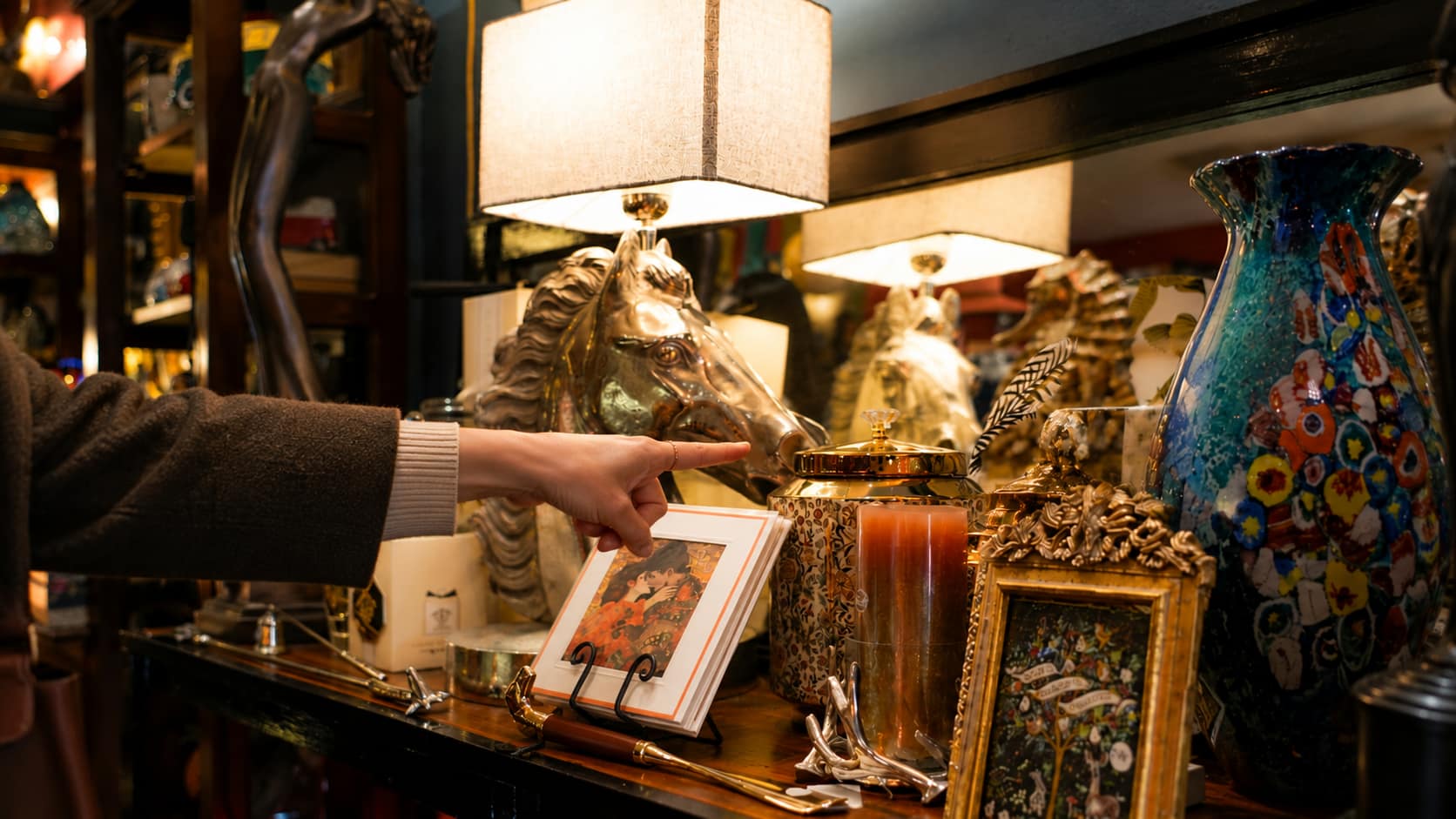
A hand moves past a row of nearly identical mugs and stops at a heavy ceramic vase with a fine web of cracks near the base. Beside it sits a hardcover book, its flyleaf marked with a careful handwritten note: To Margaret, 1974.
Neither object is perfect. That’s part of the appeal.
Not long ago, things like these were easy to dismiss as old, used, maybe a little tired. The kind of objects that ended up in basements, donation boxes, or the back shelves of a thrift store. Now they’re often the reason people walk in.
Secondhand shopping used to come with a fairly simple explanation: it was cheaper. That still matters, of course. But it no longer explains the whole picture. Thrift stores have moved well beyond the margins of retail, attracting people who aren’t just looking for a lower price.
They’re looking for something harder to find in ordinary stores.
Something with character. Something that doesn’t feel mass-produced. Something that seems to have arrived with a little more life already attached to it.
What people are finding in thrift stores isn’t simply a cheaper version of something new. It’s something new retail has a hard time producing at all.
Every Object Comes With a Story
That missing quality is individuality.
A new jacket starts out identical to every other jacket from the same rack. A secondhand one has already changed. The leather has softened in certain places. The denim has faded along real folds. A wooden cabinet may carry small scratches around the handles simply because someone opened it every day for years.
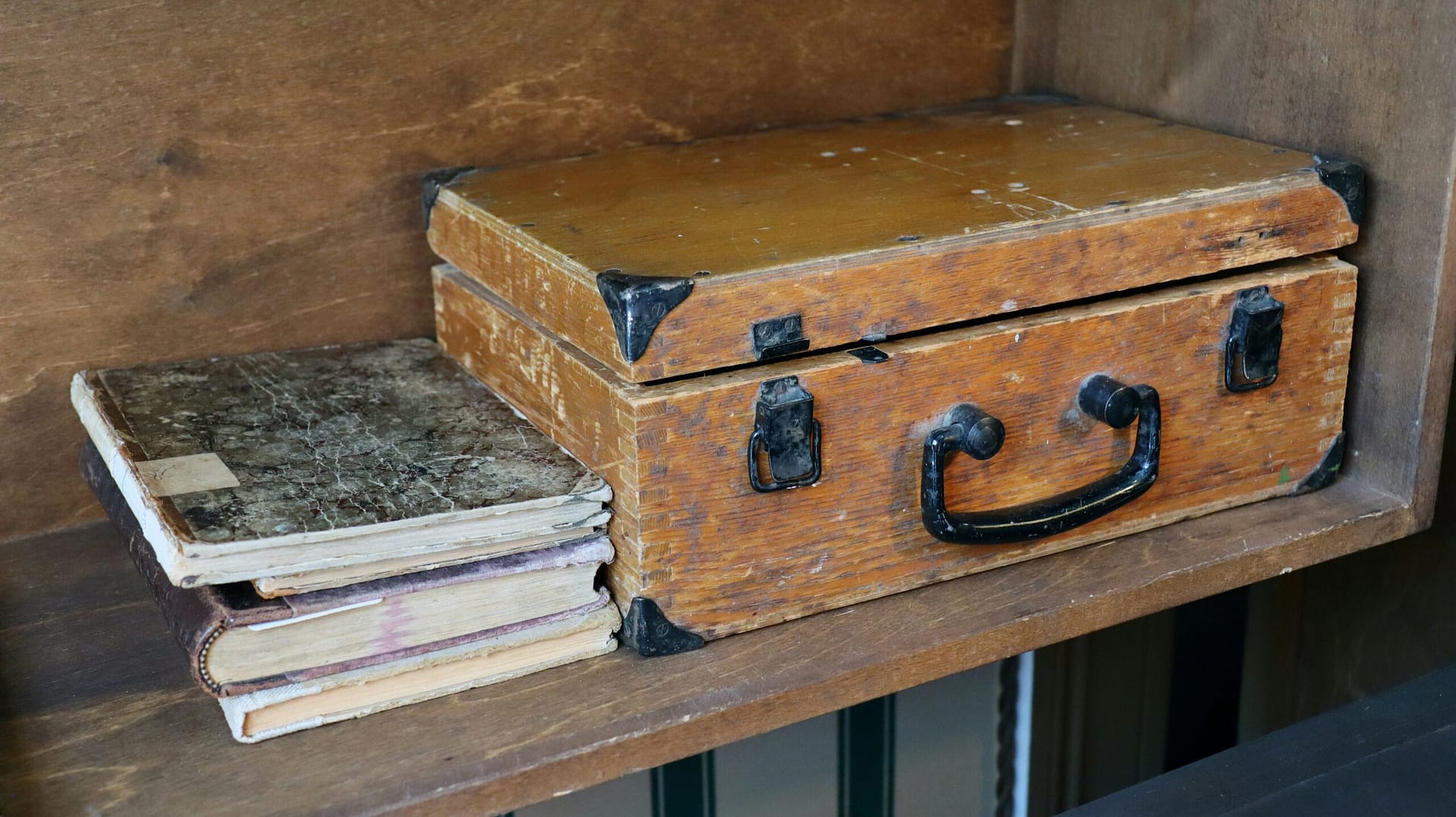
Those marks make the object specific. Not necessarily valuable in the traditional sense, and not always beautiful. But recognizably its own.
That helps explain why the pull of vintage and secondhand shopping goes beyond nostalgia. A 2025 study published in the Journal of Consumer Behaviour found that the need for uniqueness was a strong driver of positive attitudes toward vintage fashion among Gen Z shoppers.[1] In other words, people aren’t only drawn to old things because they remind them of another era. They’re drawn to them because they feel harder to duplicate.
That matters in a retail environment where almost everything can be reproduced endlessly. The same coat, the same bag, the same chair can appear in thousands of homes and wardrobes.
A secondhand object breaks that pattern. Its history has already altered it. Time has done the customizing.
And for shoppers who want their possessions to feel more personal, that can be more compelling than something perfectly new.
Why New Doesn’t Feel as Special Anymore
There was a time when bringing home something new felt like a small event. You thought about it. You waited for it. Sometimes you saved for it.
Now a replacement can be on the doorstep before the old thing has properly worn out.
That ease has changed the emotional value of newness. When almost anything is permanently available, novelty stops feeling rare. It becomes background noise. Another package. Another tab left open. Another object that seemed exciting for a week.
That’s part of what makes overconsumption feel so visible now. The problem isn’t only that people buy too much. It’s that shopping has become so effortless that desire barely has time to become desire before it turns into a transaction.
Then there’s the strange sameness of taste online. Spend enough time scrolling and the same interiors, jackets, lamps, sneakers, and color palettes begin to circle back. Algorithms are good at showing us what we already like. They’re also very good at making everyone’s preferences look oddly coordinated.
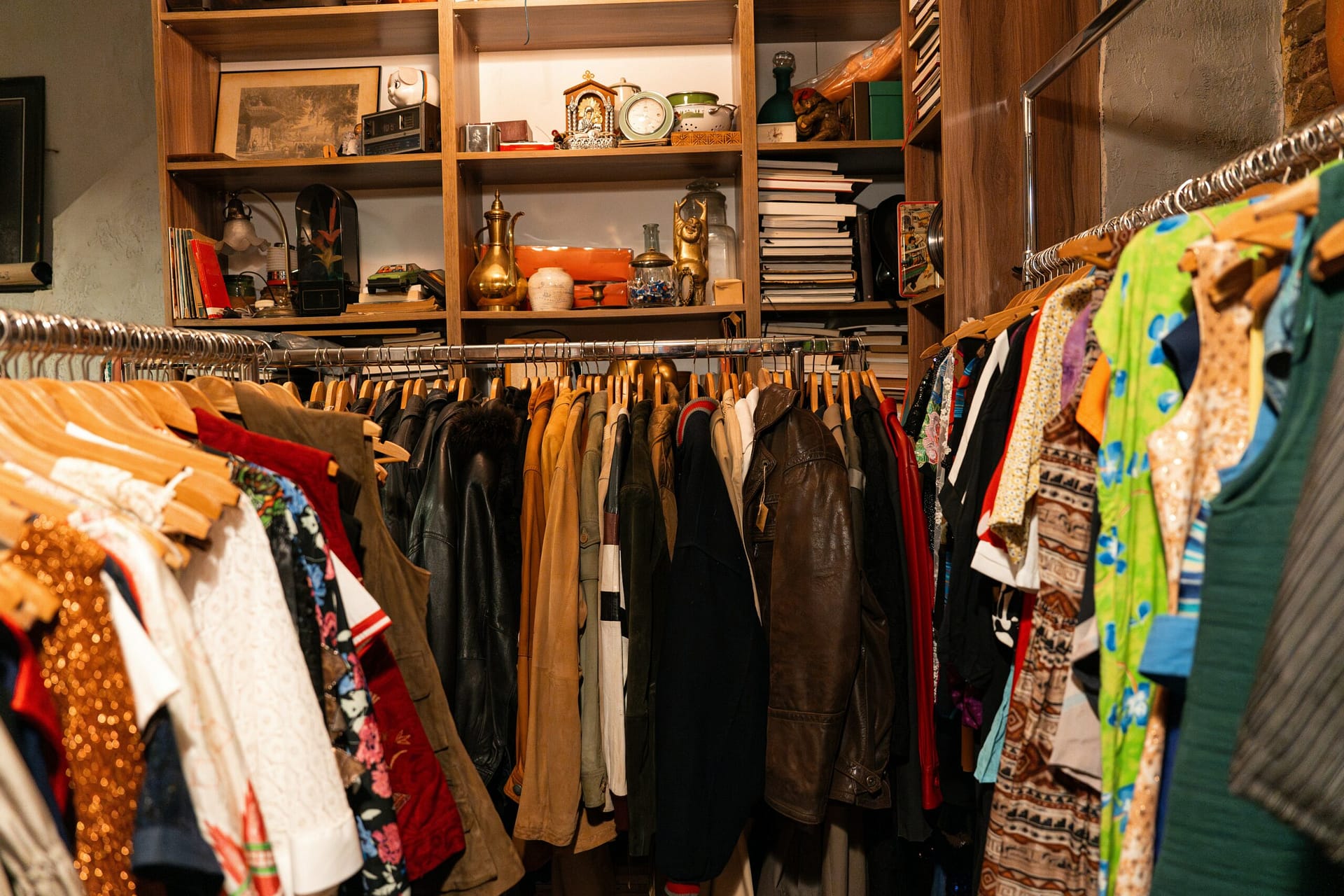
A thrift store works differently.
Its best pieces can’t simply be restocked. A discontinued bag, an old band T-shirt, or a vintage chair exists in a limited pool. That has pushed part of secondhand shopping closer to collecting: the pleasure comes from finding something specific, something you probably won’t see again next week.
The same instinct now plays out online. Vintage accounts post a single jacket and it disappears within hours. Older designer collections are searched by year, label, and season. Their attraction isn’t simply age. It’s the fact that there are only so many of them left.
When everything else can be reordered, that changes the feeling of finding one.
It’s About More Than Saving Money
So why do some secondhand pieces remain simply used, while others become the kind collectors actively hunt for?
Part of the answer sits outside the modern cycle of constant replacement. Fast fashion and cheap production make it easy to buy again; secondhand offers a way to look for versions that were made differently. A piece becomes collectible when there’s a concrete reason to seek out that particular version — a discontinued shape, a specific leather, unusual hardware, or a production year before the construction changed.
With vintage handbags, those details can turn a general search for “an old bag” into a hunt for one particular model.
A bag that has held its shape for twenty or thirty years offers something a new one can’t: proof of quality. The leather has already shown how it ages, the hardware has survived years of use, and the construction has held up long enough to earn trust. In many older models, that durability is exactly what collectors are looking for — denser leather, stronger stitching, more substantial hardware, and details that were simplified or dropped in later production.
That helps explain the renewed interest in vintage Coach. The excitement isn’t really about the logo. It’s about finding a bag from a particular era, with the leather, construction, and details collectors know are no longer made in quite the same way.

Once collectors start noticing those differences, they’re no longer looking for just any vintage bag. They’re waiting for a very specific one.
What the Rise of Thrift Stores Really Says About Us
The rise of thrift stores says something simple: new is no longer the only version of better.
A few years ago, buying used still carried a sense of compromise. It was often something you did because the original price felt hard to justify. Choosing pre-owned now can signal something quite different: a refusal to assume that the newest version is automatically the best one.
Keeping something in use can feel smarter than replacing it. A coat that still looks stylish and wearable, a table that still holds up, a bag that has already lasted twenty years — these things no longer feel like leftovers. They can feel like evidence that someone chose well.
That shift also fits a broader move toward buying with more intention. There’s more interest in what will actually last, what can be kept in use, and what is worth bringing home in the first place.
Thrift stores make that idea practical. They give useful things another owner instead of sending them out of circulation.
And maybe that is why they feel so current. They are not asking us to stop buying things. They are quietly changing what feels worth buying in the first place.
Sources:
I'm writing about beauty and celebrity culture for Vireon Press, tracking how trends evolve across fashion, media, and public life.
Retirement in Installments: Why Modern Workers Are Pausing
Why Everyone Wants a Personal Brand Now
How Social Media Made Taste Feel More Predictable
Work Life Balance: Why It Feels Harder Than Ever
Parasocial Relationships in the Age of Influencers
Minimalist Lifestyle: Simplicity as a Form of Control
Advertisement