How Social Media Made Taste Feel More Predictable
-
 By
Emily Hart
By
Emily Hart
- Culture
- 6 min read
- Culture
- 6 min read
We do not build our preferences in private anymore. More often, we filter them through a feed.
Taste used to feel slower, more personal, and harder to predict — a mix of memories, local context, borrowed references, and accidental discoveries. Now, through social media, taste starts to look more like a recognizable pattern, shaped by constant feedback from platforms and other users.
The promise of platform culture is endless inspiration. The daily reality of the scroll is narrower. It teaches people what looks desirable, current, or correct before they fully decide what they like.
As recommendation algorithms reward immediate visual recognition, individual expression moves toward shared, repeatable patterns. Personal choices still exist. But taste culture now operates inside a softer boundary drawn by the feed: what can be seen quickly, processed instantly, and recognized as belonging to the moment.
How Platforms Reward Familiar Aesthetics
The mechanics of the scroll do not give visual complexity much time. An image has only a split second to explain itself before the thumb moves on. A layout, an outfit, a room, a makeup look — each one has to land almost immediately.
This is where cognitive fluency starts to matter. The brain tends to prefer what feels easy to process. A familiar layout, color palette, or repeated reference creates a small feeling of comfort. The image does not ask for much. It arrives already readable.
That pattern shapes modern online aesthetics. The feed learns which images people pause on, save, and send around. Repeated visual cues slowly turn into a standard. Once a style becomes familiar, it stops needing much explanation. It starts acting like a default reference point.
After a while, separate niches begin to share the same visual logic. The subject changes, but the image often keeps the same atmosphere: bright light, clean backgrounds, restrained color, very little visual friction. What travels fastest is not always the most original composition. It is the image that fits the constant velocity of the thumb.
Why Taste Starts to Look Predictable
The feeling that cultural preferences are narrowing is not just a vague impression. Platforms keep returning users to what already holds their attention. A 2025 audit of TikTok’s recommendation dynamics found that interest-aligned content can be reinforced quickly within the first 200 videos, while exposure to unseen categories and exploration of new hashtags decline over time. [1]
At the center of this shift is algorithmic taste. Save one outfit, and more outfits with the same proportions begin to appear. Watch one kitchen renovation, and suddenly the feed seems full of the same stone countertop. A few seconds spent on a clean girl routine or quiet luxury bag can fill the screen with related signals.
Creators adapt because visibility is difficult to risk. Once a format works, it gets repeated: the same rhythm, framing, apartment details, and product lineup. These influencer templates become a kind of insurance, especially inside a culture where creators are expected to convert attention into trust and sales, as Vireon has explored in its piece on parasocial relationships in the age of influencers.
Shopping links shorten the distance further. The look is no longer just inspiration; it is tagged, linked, and ready to buy.
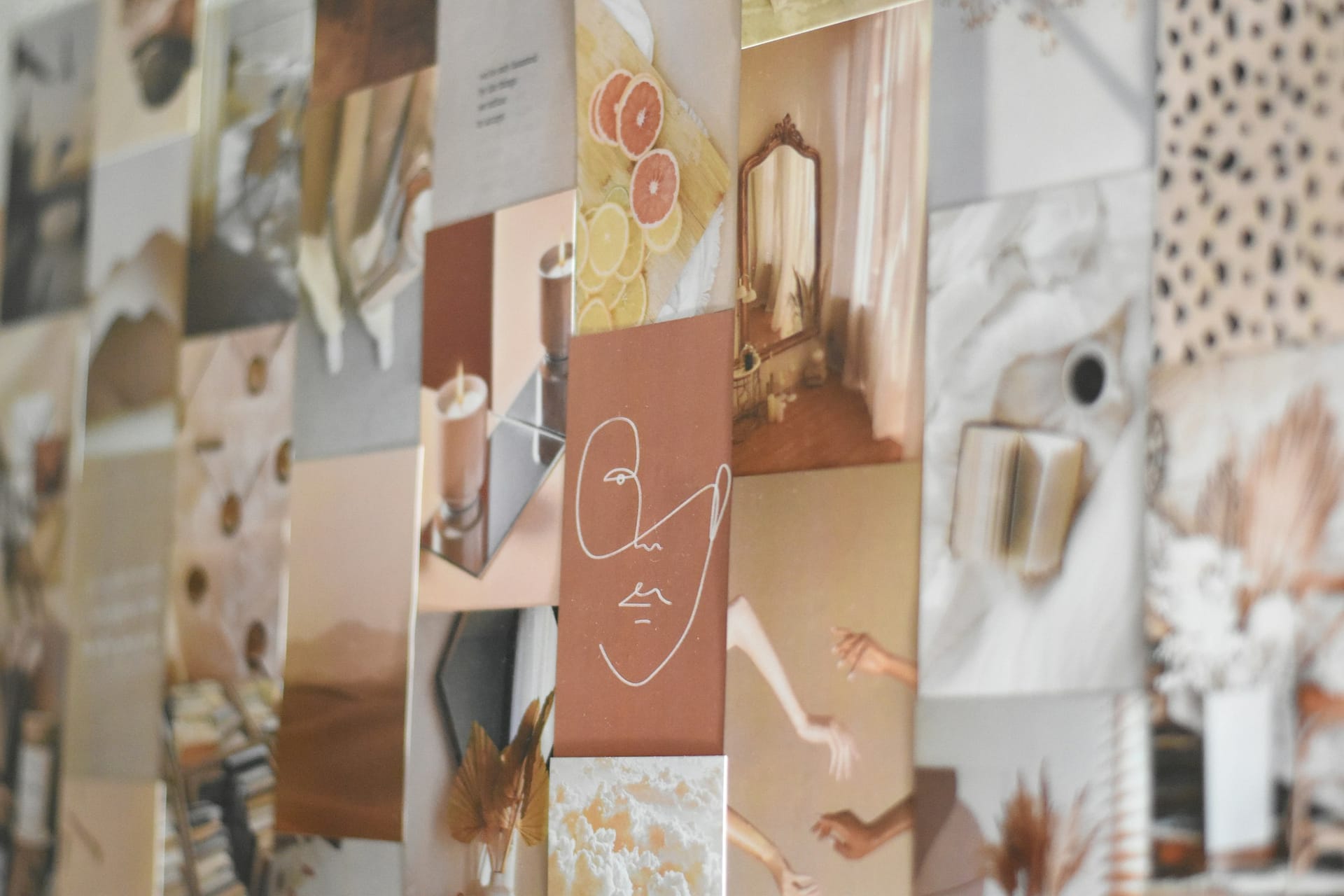
Moodboard culture finishes the loop. Clean girl, quiet luxury, dopamine decor, coastal grandmother — each label turns scattered preferences into a ready-made package. For users facing endless digital choice, that structure can feel useful. It reduces cognitive load. It also makes taste easier to enter, perform, and repeat.
The Role of Microtrends
The speed of modern social media trends has compressed the lifecycle of style. What once moved through seasons, years, or slower cultural shifts can now appear, peak, and feel dated within weeks.
The feed keeps asking for something new and specific, so aesthetics need names and quick visual boundaries. A person does not only buy new items. They can pivot between digital subcultures, adopting short-lived internet labels as a fast way to project a temporary personality online.
This changes real-world buying habits. When the look updates at the speed of a daily scroll, wardrobes and homes start to feel as if they need constant renewal. TikTok’s 2025 trend report describes a platform culture shaped by fast-moving community signals, where the old playbook of brands dictating needs is replaced by co-created content. [2] NielsenIQ insights covered by Cosmetics Business also point to TikTok Shop and changing beauty discovery patterns as major consumer signals for 2025. [3]

A specific accessory or home object can move from discovery to saturation with unusual speed. Even precise beauty references show how quickly a specific look can become a searchable product category.
Inside this pattern, the line between personal need and platform pressure becomes harder to see. This is why overconsumption starts to feel less like an extreme behavior and more like an automatic habit. The issue is not that people have no personal style. It is that the network keeps asking them to treat clothes, objects, and interiors as disposable signals.
What Still Feels Personal Outside the Feed
Even inside a narrowing platform culture, individual style does not disappear completely. Ordinary life keeps interrupting the ideal image.
A trend has to survive the weather, the rent, the room size, and the money someone actually has. A platform can track online habits and predict seasonal cycles, but it has no way to calculate the messy details of an actual day. Bank accounts and living conditions draw sharp boundaries that a digital look simply cannot override. For instance, a clothing trend often fails in a wet city or inside a daily routine built around comfort. Similarly, an interior style may look effortless online, then stop working inside a small apartment with awkward storage or not enough light.
The Packaged Aesthetic
Social media has not destroyed personal taste. It has made taste easier to organize, label, duplicate, and sell.
What once developed slowly through memory, place, habit, and accident now moves through systems that prefer clear signals. The algorithm does not invent every preference from nothing. It packages existing ones into recognizable loops, smoothing out some of the odd variations that once made style harder to predict.
People will keep using the feed as a moodboard. DataReportal’s 2025 global digital report places digital channels close to everyday brand and product discovery. [4] Inspiration has always moved through images. The difference now is the pressure to make taste instantly readable.
Individual style may depend more on what happens after the screen turns off: the objects kept without visual logic, the choices that do not fit the template, and the routines that remain unreadable to the feed.
Sources:
[1] Baumann, F., Arora, N., Rahwan, I., & Czaplicka, A. (2025). Dynamics of Algorithmic Content Amplification on TikTok. arXiv:2503.20231 [physics.soc-ph].
[2] TikTok Global Marketing Science. TikTok What’s Next 2025 Trend Report: The Era of Brand Chem (January 2025).
[3] Cosmetics Business / NielsenIQ / CEW. From TikTok Shop to Gen X: The Global Beauty Trends of 2025 Revealed.
[4] DataReportal. Digital 2025: Global Overview Report (2025).
Emily Hart
Discover with Vireon Press

Retirement in Installments: Why Modern Workers Are Pausing
Why Everyone Wants a Personal Brand Now
Work Life Balance: Why It Feels Harder Than Ever