Why Everyone Wants a Personal Brand Now

I'm writing about beauty and celebrity culture for Vireon Press, tracking how trends evolve across fashion, media, and public life.
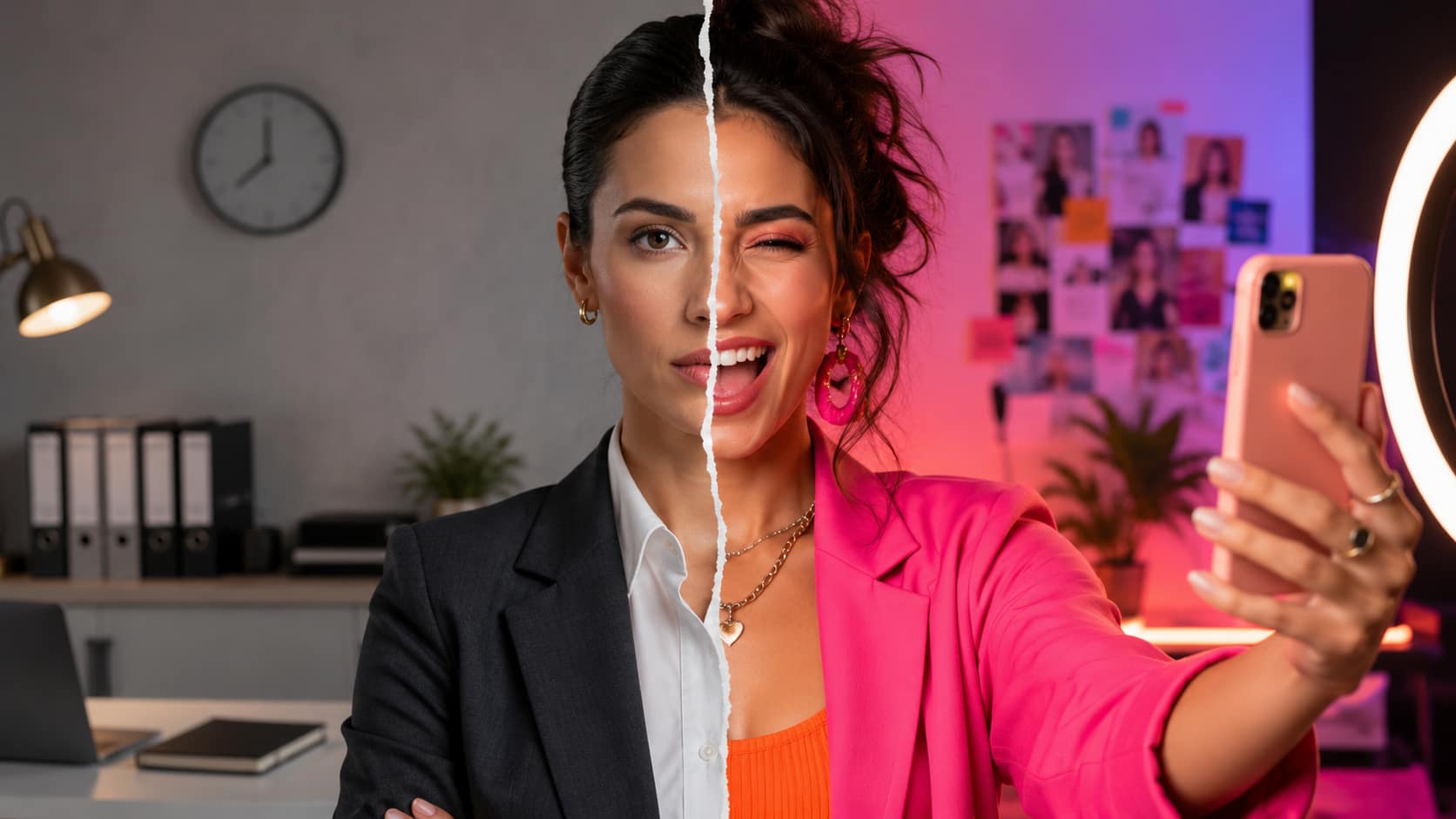
The phrase “personal brand” used to belong to a highly visible tier of the economy: lifestyle influencers, reality television figures, authors on book tours, people whose income depended on the deliberate curation of a public persona.
An ordinary professional could still afford anonymity. Competence was verified in private, documented on a résumé, and reviewed behind closed office doors. There was no need to make the whole self searchable. Who, exactly, was going to look?
That boundary has collapsed. Corporate mid-managers, software engineers, accountants, and freelancers now behave like independent media operations, turning workplace observations into public updates before the day has properly started.
This was not a sudden outbreak of collective vanity. In an economy where institutions no longer guarantee long-term security, quiet competence has started to look like a risk. What if nobody notices it? Public visibility is becoming a baseline tax for career survival.
Why Visibility Started to Feel Necessary
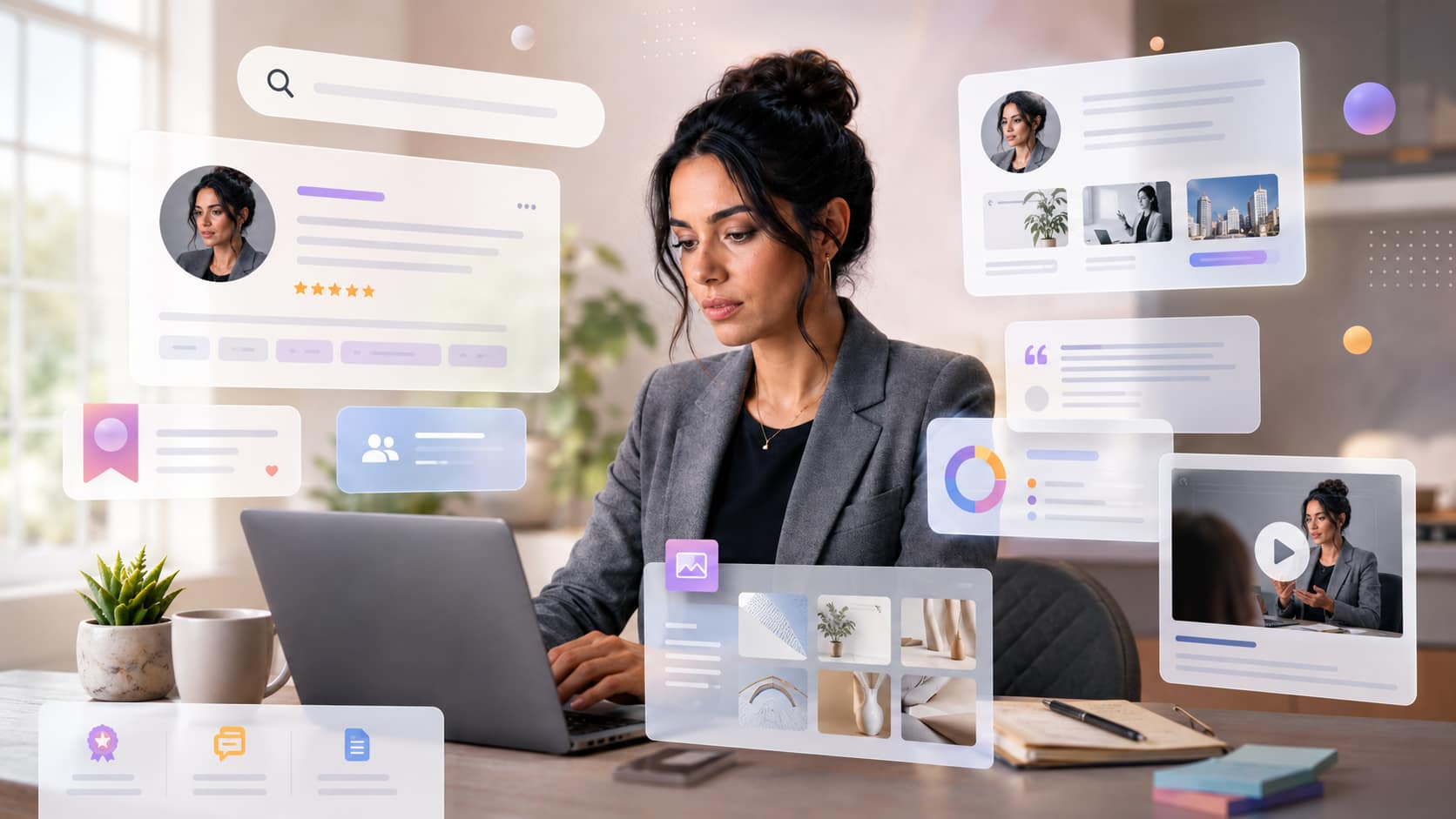
The move toward corporate visibility is a logical adaptation to a digitized labor market. Work has moved online, and so have the tracking mechanisms of reputation. Recruiters, corporate buyers, and potential partners now conduct a searchable audit before the first direct conversation.
The mechanics of trust have been outsourced to the indexable web. BusinessNewsDaily’s 2026 coverage of social media screening cites survey data showing how often hiring managers use public profiles to evaluate candidates before or around the interview process [1]. The point is not that every post becomes a verdict. It is that the absence of a public trace has started to look suspicious. Who is this person? Why is there nothing to read?
Consider the software contractor or corporate consultant working from a kitchen table, trying to look credible inside a market that has no memory of them yet. Their barrier to revenue is not always skill. It is discoverability. In a hiring system shaped by applicant tracking software and keyword filters, a complex career can be flattened into a file before anyone understands it.
An active online identity becomes a defensive strategy: a way to bypass bureaucratic gates and return a face to the assessment process. Trust must now be manufactured upfront, or the professional risks becoming invisible to the market.
The Creator Economy Changed Expectations
The creator economy supplied the tools first: Substack, Medium, visual carousels, algorithmic feeds, the whole machinery of amateur publishing. Then it changed the rules of professional presentation. Formats once used to sell morning routines and apartment tours became available to corporate analysts, lawyers, project managers, and anyone else with a job and a point to make.
LinkedIn represents the infrastructure of this migration. Reuters reported that the platform expanded its focus to creator-led video layout, shifting a space once defined strictly by job changes and corporate announcements into a live media channel [2]. The development alters the filtration rules. When institutional prestige or formal credentials fade as primary gatekeepers, a professional must make their execution legible directly through the feed.
The premium moved beyond basic technical skill: taste, perspective, temperament, the specific way a person explains the work. Competence remains necessary. It just travels better when it has a face, a voice, and a visible point of view.
The Pressure Behind the Trend
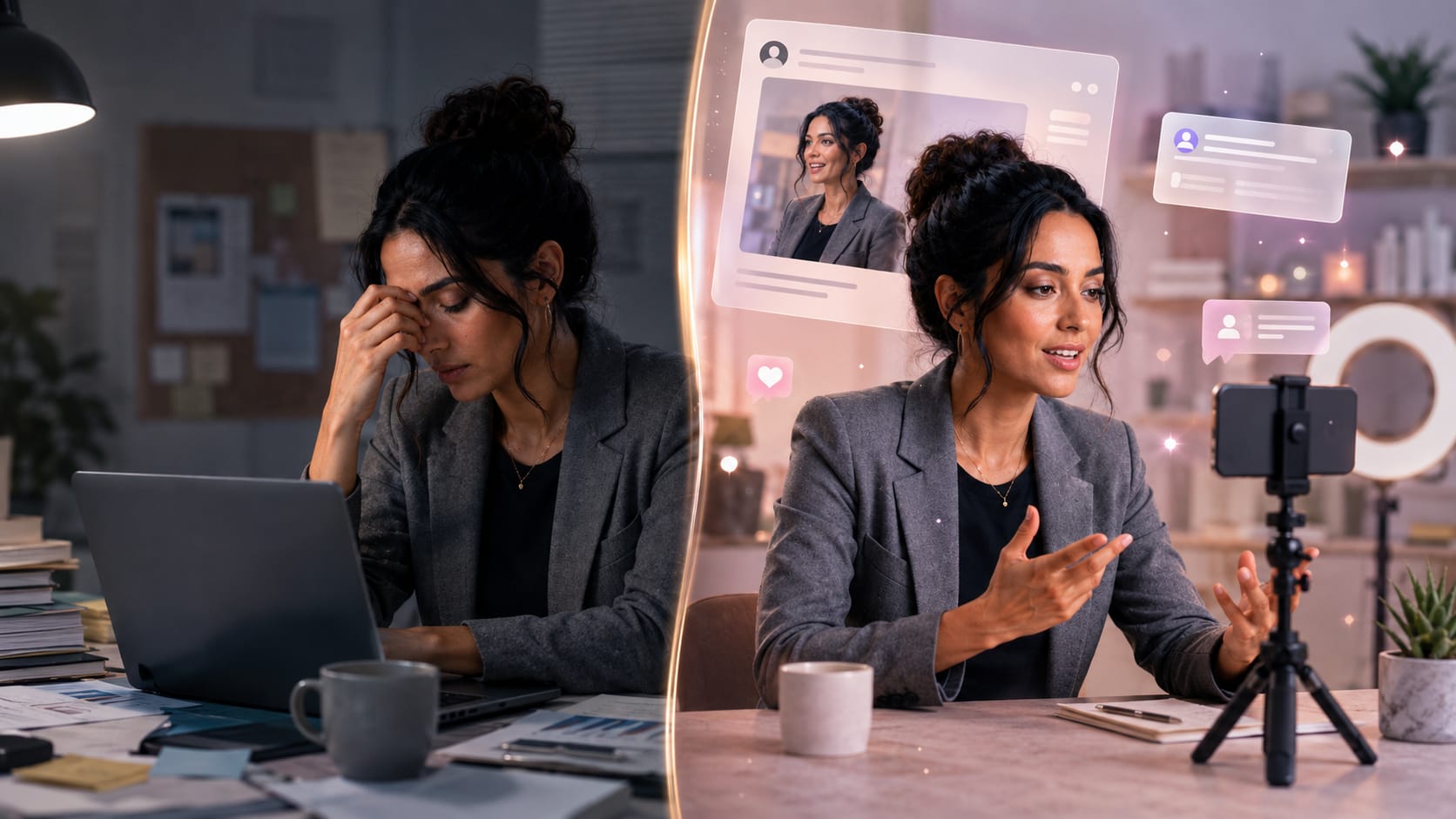
This level of visibility creates a quiet, exhausting performance. When everyday work becomes material for an online profile, professional life starts to resemble a permanent production cycle. A stressful project, a missed deadline, or a difficult quarter cannot simply be endured and left alone. It waits to be managed into a narrative with a useful business ending.
TIME described this broader condition as a world where we are all working for the algorithm, with private experience increasingly converted into public material [3]. The line feels uncomfortably accurate. A person begins to look at their own day twice: once as someone living it, and once as someone deciding whether it can become a post.
The pressure is maintained by the fear of digital silence. In a searchable market, a week without publishing can feel like disappearance. What if the recruiters stop seeing the profile? What if the algorithm stops offering the person up as active, useful, alive?
Over time, the private person and the professional commodity begin to blur. A specialist sitting at a kitchen table starts measuring career value through flat signals: likes, reposts, comment counts. The personal brand stops being a shield for the career and becomes another job to maintain after the real work is done, pulling ordinary professionals closer to the same attention logic Vireon has explored in its piece on parasocial relationships in the age of influencers.
What a Healthier Personal Brand Looks Like

Lowering the stakes is a calculated defensive move. When the online feed turns into uncompensated labor, a professional must treat the profile as a static index rather than a daily broadcasting channel. The strategy depends on clear, structural boundaries around what gets exposed.
Selective visibility: Choose one narrow technical or industry problem to analyze in public. A cybersecurity consultant might write about common audit mistakes. A recruiter might explain hiring signals. A freelance editor might show how unclear copy gets repaired. The rest of the working day can stay offline.
Utility over performance: Move away from inflated career updates and manufactured business lessons. Quiet, predictable observations often say more. A useful note on industry data, a method that keeps appearing in client work, a pattern noticed before it becomes obvious.
Static consistency: Let the profile act as a searchable index of capability, not an interactive stage that needs constant engagement bait to survive.
The purpose of a digital footprint becomes simpler here. An online identity does not need to become an endless content loop to remain effective. It only needs to leave a reliable trace of actual competence, a proof of work that stays behind after the laptop is shut for the night.
The Searchable Asset
Personal branding is unlikely to disappear, not because everyone secretly wants to become an influencer, but because reputation has become easier to search, display, and sell back to the market.
A profile now carries some of the work that used to belong to institutions, references, and closed professional circles. It gives strangers a way to decide whether someone seems credible before a conversation begins. That does not make the pressure healthy. It only explains why so many people keep participating.
The least exhausting version treats visibility as a tool, not a lifestyle. A personal brand does not need to hold the grid’s attention forever. It only needs to leave a clear enough trace of expertise that the person can be found, understood, and then allowed to return to the actual work.
Sources:
[1] BusinessNewsDaily. How Social Media Screenings Affect Hiring Decisions (2026).
[2] Reuters. “LinkedIn deepens video ad push, taps more publishers and creators to spur growth” (2025).
[3] TIME. We’re All Working for the Algorithm Now (2025).
I'm writing about beauty and celebrity culture for Vireon Press, tracking how trends evolve across fashion, media, and public life.
Why Thrift Stores Are Booming Right Now

Retirement in Installments: Why Modern Workers Are Pausing
How Social Media Made Taste Feel More Predictable

Work Life Balance: Why It Feels Harder Than Ever

Parasocial Relationships in the Age of Influencers

Minimalist Lifestyle: Simplicity as a Form of Control
Advertisement