Satellite Internet: Why Low Earth Orbit Became Competitive

-
 By
VireonPress Editorial
By
VireonPress Editorial
- Technology
- 5 min read
- Technology
- 5 min read
As we all know, satellite internet has long been a backup option for regions where cable infrastructure was impossible to install for compelling reasons. And yes, it was traditionally perceived as a high-latency internet with disproportionately high costs.
However, the current situation is different – the deployment of thousands of satellite clusters in low-Earth orbit has transformed this type of connection into a full-fledged competitor to cable network infrastructures.
From GEO to LEO: What Changed
For many years, space-based networks relied on geostationary orbit. For example, satellites like Viasat and EchoStar hover in a single location above the equator at an altitude of approximately 35,786 km, allowing them to cover almost the entire Earth with just three satellites. However, the problem is that physics cannot be fooled in practice, meaning a signal, no matter how good, will still take time to travel this distance there and back.
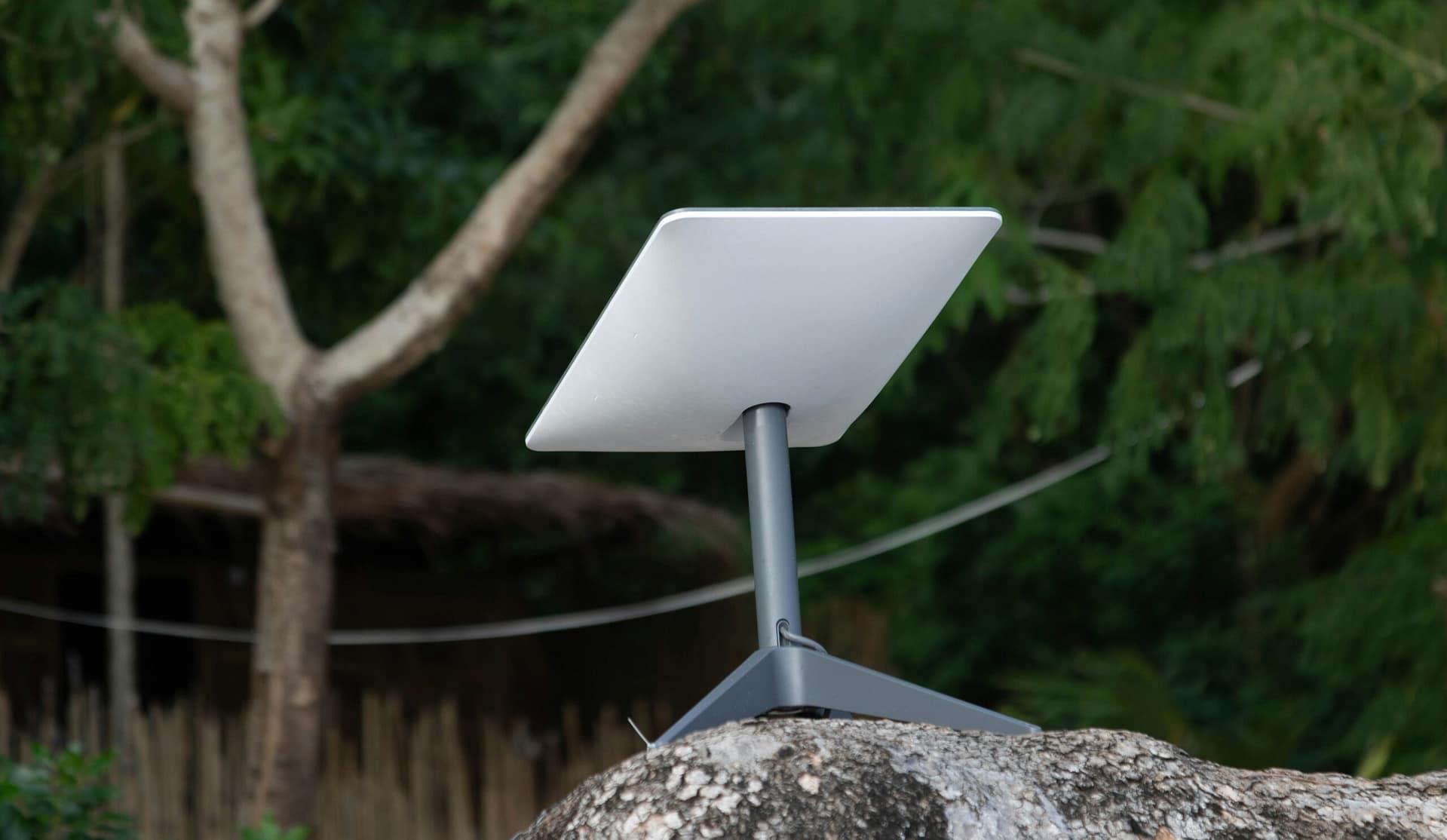
Meanwhile, the transition to low Earth orbit satellites, where well-known brands like Starlink and OneWeb operate, removes this obstacle. Because these satellites hover at an altitude of only 300–550 km, more of them are undoubtedly needed (thousands are needed to provide global coverage), but this provides a decisive advantage in signal arrival speed.
Latency and Performance Improvements
Latency is perhaps the most critical issue with previous-generation satellite internet. For example, in GEO networks, latency is about 600-800 ms, making even basic Zoom video calls impossible, let alone online gaming or efficient real-time cloud services. In contrast, in LEO networks, latency drops to just 25-40 ms, which is essentially the same as that typical of standard cable internet.
Now, a few words about use cases where next-generation satellite internet can be actively used. The first is maritime transportation. Previously, ocean-going vessels used the internet only for email and weather information. At the same time, the transition to LEO has given crews the ability to conduct video conferences and streaming, radically optimizing working conditions. The financial sector is also worth mentioning: for algorithmic trading, every 10 ms matters. In this context, laser inter-satellite links (typical to Starlink internet [1], for example) allow data to be transmitted between continents faster than through fiber optic cables laid along the ocean floor, as the speed of light in a vacuum is higher than in glass. Therefore, using satellite internet can directly impact whether traders will be able to secure a good deal.
Starlink vs Viasat: Different Models
Competition in orbit today is a clash of two radically different approaches to infrastructure construction. For example, Viasat internet is relying on the massive satellite broadband of individual terabit satellites (which, incidentally, are currently completely useless for latency-sensitive tasks), while Starlink is building a massive network in space, with each new satellite increasing coverage density and improving signal stability.
|
Feature
|
Viasat
|
Starlink
|
|---|---|---|
|
Orbit
|
36,000 km
|
550 km
|
|
The number of satellites
|
Single but extremely powerful
|
Thousands, each with a compact form factor and easy replacement
|
|
Antenna type
|
Fixed
|
Phased array
|
|
Target audience
|
Television/local internet
|
Mobility/military/aviation/remote offices
|
|
Scalability
|
Limited to the power of a single satellite
|
High, with the ability to add more units to increase network capacity
|
Infrastructure Costs and Scaling
The main aspect to understand is the cost of payload. In this regard, SpaceX outperformed its competitors by developing reusable Falcon 9 rockets, thereby reducing launch costs severalfold. This allowed them to outcompete other giants who didn’t have their own rockets (such as Amazon and OneWeb), making the economics of their project much simpler.
However, scaling also requires, in addition to producing thousands of satellites, the availability of ground infrastructure, including gateways. These are necessary so that when a LEO satellite transmits data to a user, it also must see a ground station connected to the global internet.
Today, this challenge is overcome through laser communication between satellites, where data is transmitted from one satellite to another in space, and this process continues until it reaches a satellite above the ground station. Ultimately, this makes it possible to provide internet service even in the center of Antarctica or the middle of the Pacific Ocean without the need for local tower construction.
Limitations
Despite its progress, satellite internet technology still faces a number of limitations, including:
User concentration. Satellite internet generalizes bandwidth over a specific region. For example, in densely populated cities like New York or London, the beam’s capacity is quickly depleted, so internet speeds drop rapidly. Thus, satellite internet is ideal for a farm in Iowa, but is unlikely to be suitable for residents of an apartment building in the center of a metropolis.
Light pollution and debris. Astronomers are raising the alarm about thousands of bright spots in the sky interfering with observations. Furthermore, the risk of the Kessler effect (referring to a cascading collision of satellites) is forcing regulators to significantly tighten regulations for the disposal of satellites at the end of their service life.
Geopolitical nuances. Not all countries are willing to allow foreign satellite networks to operate on their territory. For example, China is actively building its G60 Starlink constellation to ensure sovereignty over its segment of the orbital internet [2], so global connectivity is still impossible today.
Conclusion
In summary, low-orbit systems have proven that space can be just as capable as terrestrial fiber when it comes to transmitting data over hundreds of thousands of kilometers. The main thing is to understand where their use is practical and where it makes sense to stick with the conventional approach of underground cables.
Sources:
VireonPress Editorial
Discover with Vireon Press

Building Before the Demand: ASML’s Long-Term Semiconductor Bet

The End of the Open Market: When AI Starts Buying Years Ahead