Self Driving Cars: Progress, Limits, and Real-World Constraints
-
 By
Arthur Kellan
By
Arthur Kellan
- Technology
- 5 min read
- Technology
- 5 min read
About ten years ago, we thought driving would be automated by now, no longer requiring human intervention. We thought cities would be free of traffic jams, parking problems would be solved, and we’d be able to sleep in the backseat on our way to work. But reality turned out to be much harsher, and progress in self-driving cars hasn’t been as rapid as hoped.
Still, the problem isn’t that engineers aren’t smart enough, but because driving, in addition to following traffic rules, also requires constantly resolving social and situational dilemmas that can arise at the most random moment.
What Self Driving Cars Can Do Today
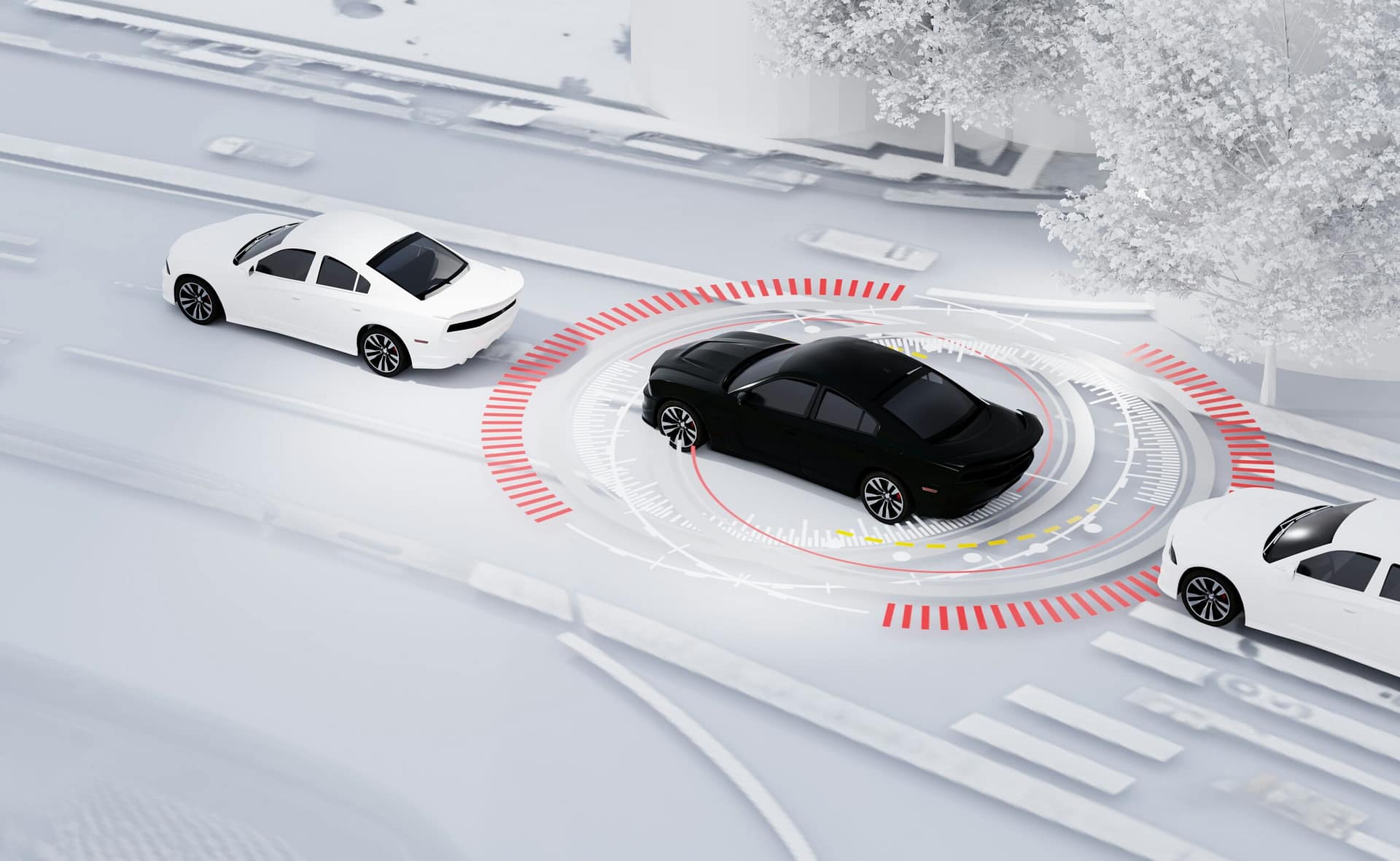


Currently, the autonomous driving industry can be formally divided into two groups: the first consists of consumer driver assistance systems like Tesla’s FSD or GM’s Super Cruise (which require constant driver supervision), while the second consists of robotaxis like Waymo or Zoox (which transport passengers without a driver in several US cities, such as Phoenix and San Francisco [1]). In general, modern self-driving systems are excellent at:
– Driving on clearly marked highways;
– Recognizing static objects and maintaining distance between vehicles;
– Parking and navigating in dense traffic at low speeds.
The Problem of Edge Cases
The main barrier to achieving full autonomy in self-driving cars is the so-called long tail of rare events. This means that, hypothetically, an AI can drive a million miles on a sunny California highway without a single error, but it can stall in edge cases like the following:
– When a traffic cop (a human) signals with his/her hands instead of a traffic light;
– When a truck with a mirrored side reflects the sky coming toward you (generally speaking, this is a standard problem for systems without lidar);
– When an ordinary package blows in the wind, and the car perceives it as a concrete slab, causing it to brake sharply.
Indeed, unlike AI, the human brain can generalize and recognize even the most subtle context. Current-generation AI, on the other hand, still operates based on patterns, and if the situation wasn’t included in the training set, the neural network will be unable to produce a correct result.
Safety vs Scalability
It’s important to understand that each industry leader manufacturing self driving cars has its own vision of how this technology should evolve.
For example, Waymo prioritizes safety – their cars drive perfectly, but only in areas where every surface, down to the curb, is digitally monitored. Tesla, on the other hand, has opted for scale: their software works everywhere; however, a significant error rate requires the driver’s hands to be on the steering wheel at all times. For a clearer understanding, we’ve provided a comparison table below of these two dominant approaches to implementing a self driving technology.
Long-Term Implications
Technologies become utilitarian – they just have to work.
|
Feature
|
Pure Vision by Tesla
|
Sensor Fusion by Waymo
|
|---|---|---|
|
Sensor set
|
Cameras only (whose sensitivity, however, exceeds that of the human eye
|
Cameras, lidars, and radars
|
|
Mapping
|
Relies on GPS and real-time visual landmarks
|
High-precision maps with centimeter accuracy
|
|
Pricing
|
Low (suitable for mass-produced vehicles)
|
Very high (as equipment costs higher than the vehicle itself)
|
|
Scalability
|
High: can drive on any road
|
Low: requires preliminary scanning of urban environments
|
|
Reliability
|
Suffers in real-world conditions with poor visibility (e.g., rain or fog)
|
Safety systems are top due to data duplication
|
Regulation and Public Trust
The technological advancement of autonomous vehicles is only half the battle; the rest depends on how the legal and insurance sectors react to their implementation.
In a typical accident, the driver is at fault, but who is to blame in the case of autonomous vehicles? Is it the owner who failed to update the software, or perhaps the algorithm developer who failed to anticipate a specific scenario? Or does it make sense to hold the lidar manufacturer responsible for a hardware failure? All of this is hindering both the introduction of new regulations and the scaling of the insurance sector, as its representatives simply cannot objectively calculate the risks.
The zero-tolerance paradox also exists – the fact is that more than 1.3 million people die in road accidents worldwide every year [2]. When this happens due to driver error, it is perceived as inevitable, but when it is due to AI error, loyalty begins to dwindle. A striking example of this is the Cruise accident in San Francisco in October 2023 [3]. After a self-driving car struck a pedestrian who had been thrown into the path of a robotaxi by another human-driven vehicle, the company faced devastating consequences. Despite the initial collision being caused by a human, regulators immediately revoked Cruise’s license. Mass protests and vandalism against robotaxis followed, ultimately leading to a devastating decline in trust in autonomous vehicles nationwide.
Why Full Autonomy Remains Unresolved
Autonomy levels according to the SAE classification range from 0 to 5, with level 5 implying that the car may not have a steering wheel and is capable of driving in any weather and on any terrain.
At the same time, driving remains a social process – we catch the eye of another driver to determine whether they’ll let us pass, recognize that a child on the side of the road might suddenly run after a ball, and generally accurately interpret the other subject’s intentions. From this perspective, teaching a machine social intelligence is millions of times more difficult than teaching it to recognize stop signs.
Conclusion
While driving may seem simple to a seasoned driver, when we break this process down into algorithms, it turns out to be much more sophisticated. We are certainly moving toward the future, but it’s likely that autopilot won’t replace the driver, but rather act as a support partner.
Sources:
Arthur Kellan
Discover with Vireon Press
Edge Computing: When the Cloud Is Too Far Away

AI Agents: Why Software Is Starting to Look Disposable