Best LED Face Masks 2026: Light Colors, Formats, and Top Picks

-
 By
Emily Hart
By
Emily Hart
- Beauty
- 8 min read
-
By
Emily Hart
- Beauty
- 8 min read
By 2026, LED face masks are now a go-to routine for many people—and they’re only getting more popular. But how to pick the right one when almost no one has time to decode a page of technical specs? How to tell if you need red light, blue light, near-infrared, or a dozen presets that all sound the same? Rigid or flexible? Silicone or hard shell? For the décolletage, the full face, or something designed to target specific spots?
In this article, we’ll break down what LED light therapy means in at-home devices and how the main types of light work. We’ll look at all the formats on the market. And finally, we’ll pinpoint the best options for each specific goal—anti-aging, acne and pigmentation, puffiness, and more.
What LED Masks Actually Do (and What They Can’t)
Any LED light therapy is about consistency. This isn’t a one-off treatment or something you do “a couple times a week.” It’s a daily habit, and the results are something you’ll notice over time.
What LED masks actually do
LED masks use specific wavelengths, most commonly red, blue, and near-infrared (NIR). Different colors correspond to different wavelength ranges—most often blue around 415 nm, red around 633 nm, and near-infrared (NIR) around 830 nm. These numbers may vary (630 instead of 633, or 830 instead of 850), but they tell you what light the device is actually emitting. That’s far more useful when choosing a mask than relying on presets like “glow” or “clear.” Once you understand these specs, you can quickly tell whether a device operates in the right range for your goal.
- Red light (typically ~620–660 nm) is used to improve overall skin tone, soften the look of early fine lines, and give skin a fresher, more well-rested appearance.
- Near-infrared / NIR (typically ~800–900 nm, often ~830–850 nm) usually comes alongside red light and is associated with a deeper-looking boost in firmness.
Blue light (typically ~405–420 nm, most often ~415 nm) is most often aimed at blemish-prone skin.
What LED masks can’t do
An LED mask can genuinely upgrade your routine, but it won’t replace the basics—SPF, sleep, and simple skincare. No matter how effective it is, it won’t give you an instant “lift,” erase deep pigmentation in a week, or fix serious skin concerns on its own. And it doesn’t have to. Think of it as an add-on and a boost to your routine: small steps, regular use, and realistic expectations.
Mask Formats, Explained
Why the mask format? Coverage and convenience. A full-face device gives you more even exposure across the skin. It’s also easier than a handheld gadget you have to move around your face, trying to keep every pass consistent. With a mask, you can read, watch your favorite show, get ready for work, or do things around the house while the device runs in the background. In the end, it comes down to comfort. And comfort is what makes you use it regularly.
Full-face masks are designed for overall goals: enhancing skin texture, helping skin look more even in tone, boosting glow, and smoothing the look of early fine lines.
They usually come in two main formats:
- Rigid (hard shell) masks typically feel more safe and “structured” on the face. However, if the shape doesn’t match your features,they may cause discomfort and pressure spots, usually in the area of your cheekbones or nasal bridge.
- Flexible silicone masks are often more comfortable since they fit closer to the skin. People are more likely to use them regularly because they are also simpler to tolerate for extended wear.
That said, full-face masks aren’t the only option. Sometimes the issue isn’t your whole face—it’s a specific area. You may, for example, concentrate on the neck and décolletage, or work on breakouts in certain areas. For those goals, there are dedicated formats too:
- Targeted spot devices make the most sense when the concern is local, like an occasional breakout. They work directly on the area, are easy to attach, and feel less noticeable while you’re wearing them.
Neck and décolletage devices are just as practical and follow the same idea—treating the issue locally. These areas often get less consistent care than the face, which is why they tend to show creasing and texture sooner.
The Best LED Devices of 2026: Top Picks for Real Results
At this point, we’ve already covered how LED masks work, what the light colors actually mean, and the main formats you’ll see. So below, we’ve put together a shortlist of the best LED devices in each category.
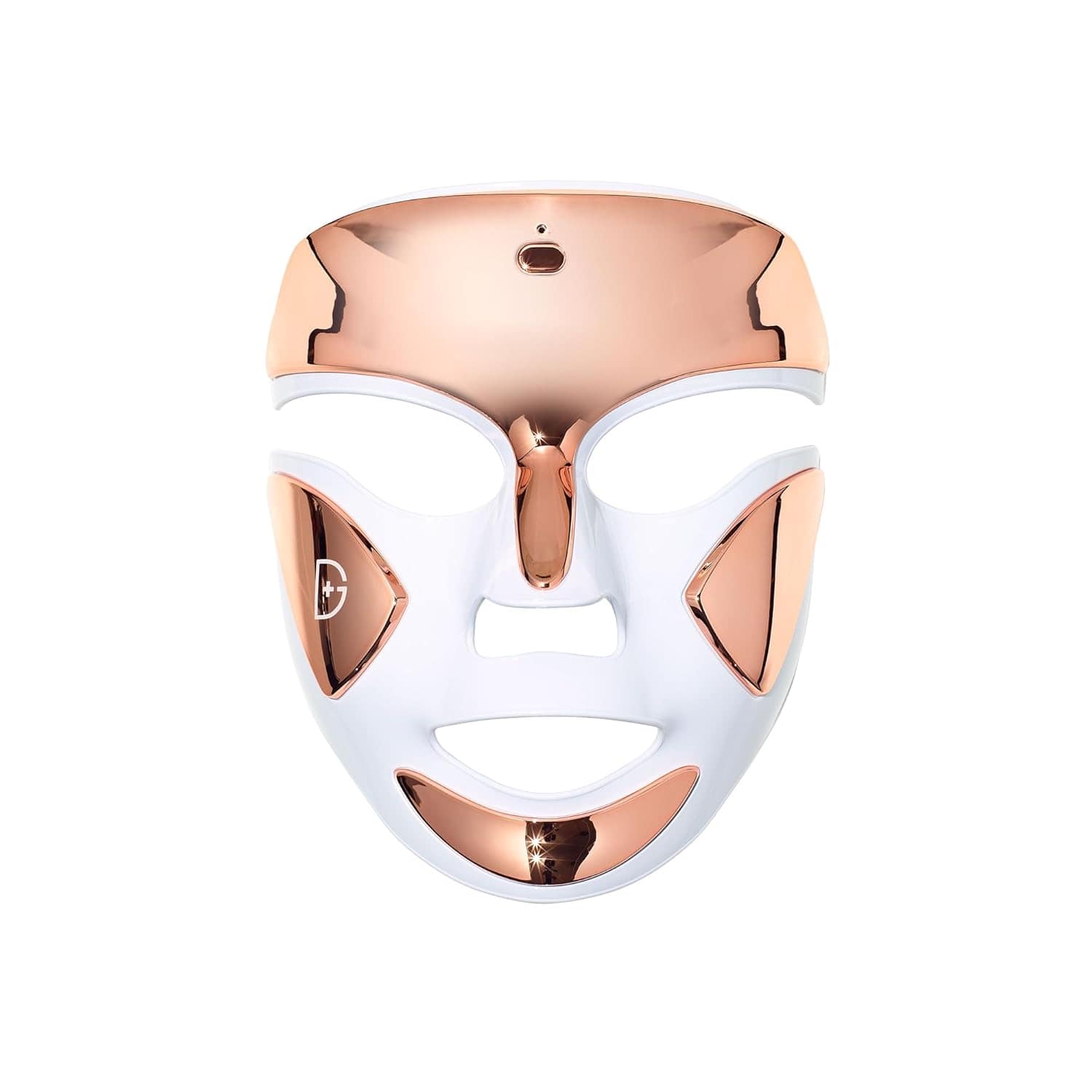
Dr. Dennis Gross DRx SpectraLite FaceWare Pro
A rigid full-face mask with red and blue light and a signature 3-minute treatment.
Pros: based on buyer reviews, it helps calm and fight breakouts when used consistently.
Cons: the hard shell format isn’t comfortable for everyone.
Therabody TheraFace Mask Glo
A full-face mask with red 633 nm, NIR 830 nm, and blue light, built around 12-minute presets.
Pros: comfortable to use, has clear wavelength disclosure, and published study materials..
Cons: the price.

HigherDOSE Red Light Face Mask
A red + NIR-focused mask with no emphasis on blue, built for a simple, repeatable routine.
Pros: minimal modes and easy to integrate into your daily life; the brand gives clinical test results with regular use.
Cons: no blue light.

CurrentBody Skin LED Mask (Series 2)
A flexible silicone full-face mask with red 633 nm and NIR 830 nm (often also listing deep NIR).
Pros: one of the most comfortable fits, according to reviewers, which makes it simpler to use on a regular basis.
Cons: no blue light.

SolaWave Wrinkle Retreat Light Therapy Face Mask
A full-face mask with red 630 nm and NIR 830 nm, with a simple timed session.
Pros: reviews frequently mention brighter-looking tone and glow over time; simple settings that make it easy to use.
Cons: results tend to be gentle and slow.

Shark CryoGlow
A rigid full-face mask with LED modes and cooling for the under-eye zone.
Pros: a noticeable de-puffing effect thanks to cooling; reviews often praise that “morning reset” feeling.
Cons: bulky, structured fit, and not the most compact option.

Ulike LED Mask
A full-face mask with red, blue, yellow, and infrared modes, designed for a quick daily routine—about 8 minutes a day.
Pros: multiple modes for different goals and a clear “quick and consistent” routine; it also claims eye protection.
Cons: there are a lot of modes, and it’s easy to get lost in the options.

iRestore Illumina LED Face Mask
A full-face mask with red 635 nm, NIR 830 nm, and blue 415 nm that can run a combined mode in one go.
Pros: there’s a registered 12-week study; convenient if you don’t want to think about choosing and rotating modes.
Cons: because it includes blue mode, it won’t be a fit for everyone—especially if pigmentation is a concern.

CurrentBody Skin Neck & Décolletage Mask
A separate flexible device for the neck and chest built around red/NIR ranges, designed for targeted work in that area.
Pros: dedicated zone coverage and a hands-free format; customers often say that with regular application, the skin seems smoother and more polished.
Cons: it’s an extra step in your routine, since it doesn’t replace a face mask.

LUSTRE ClearSkin Solo
A spot device using blue light (with an emphasis on 415 nm), made for local treatment when you don’t need a full-face mask.
Pros: easy to use directly on one problem area; it attaches securely and feels more comfortable to move around in.
Cons: you’ll need to be consistent with placement and timing to see a difference.

NVBOTY LED Light Therapy Mask
An affordable full-face mask with several modes, built for a basic LED routine without premium extras.
Pros: low barrier to entry, allowing you to test the LED mask format before spending more money on a more expensive model.
Cons: the fit tends to be less comfortable than higher-end options.

Final Take
LED masks are getting more and more popular for a reason. They’re one of the few at-home beauty gadgets that can deliver a real cumulative effect when you use them consistently. LED treatment has made the transition from dermatologist and cosmetologist clinics to the home—it is quick, simple, and easy to include into your daily routine. There are numerous options, and price isn’t the most important factor. What really matters is choosing what actually fits you: your goal, the format, how comfortable it feels, and how much time you’re willing to spend each day to make it work. And now you have a small guide to help with that.
So if you have the interest (and the budget), don’t be afraid to try something new. This isn’t about chasing “perfect” skin—it’s about letting your routine feel a little more intentional. And sometimes the best beauty upgrade isn’t injections—it’s consistent, well-chosen skincare—the best investment you can make in how your skin ages.