Blue Eyeshadow Trend 2026: Why It Looks Different Now
-
 By
Emily Hart
By
Emily Hart
- Beauty
- 7 min read
- Beauty
- 7 min read
If we’re talking about blue eyeshadow, it has never really been an easy color in beauty. It seems to carry too much history. Over the decades, blue kept changing. New moods, new textures, new associations gathered around it, while older images stayed close. It almost never slips into makeup as quietly as many other shades do. It tends to bring that history with it.
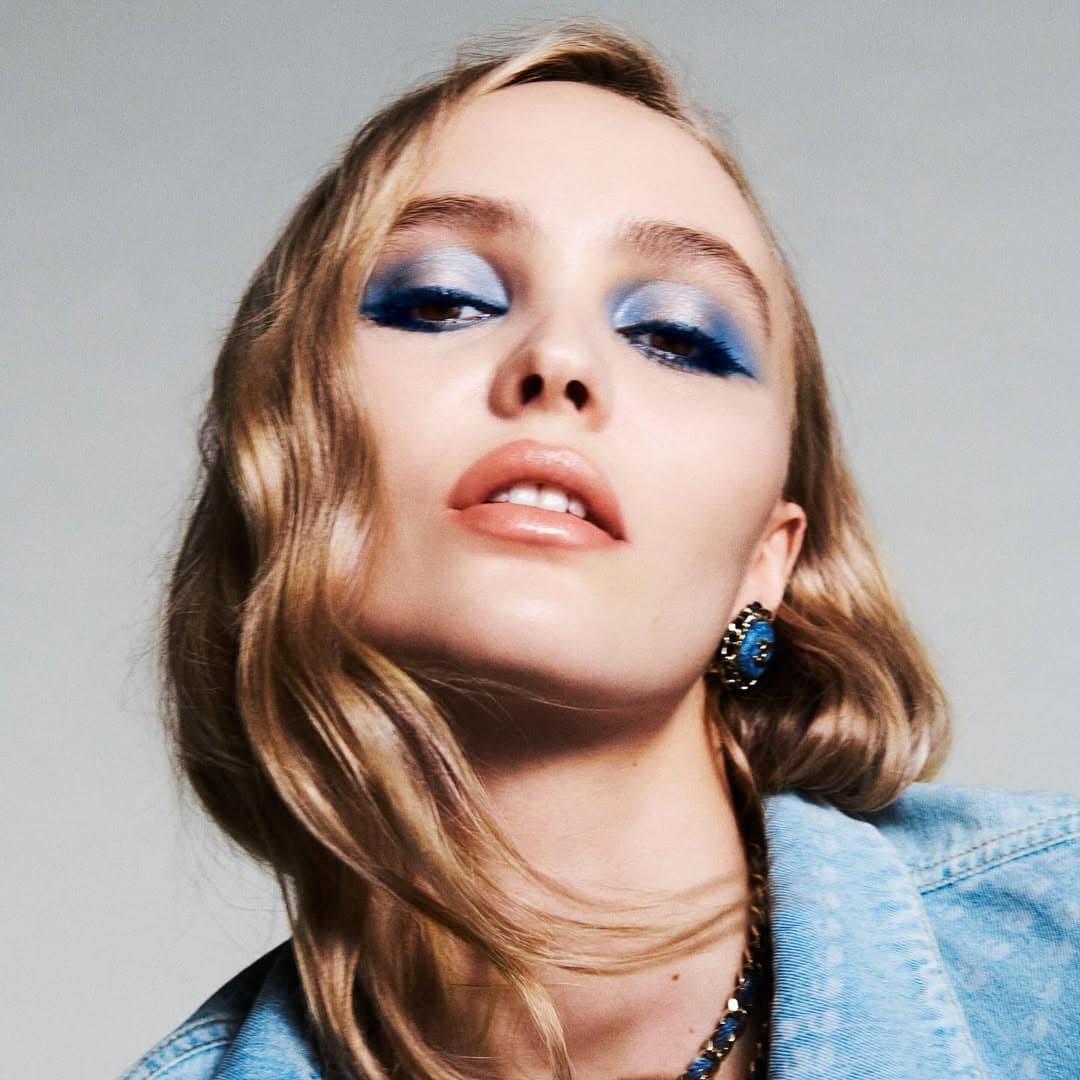
So why does this return feel different now? Probably because the color itself has changed shape again. The blue eyeshadow trend 2026 is not bringing back that old icy lid exactly as it was. What is showing up now feels softer, more washed through, more blurred at the edges. Sometimes it is almost denim. Sometimes it is only a trace of blue. The shade is still familiar, but now it feels less stuck in the past.
Too Much History to Feel Neutral
In the ’60s, blue could look cool, graphic, almost futuristic. The eye was sharper then, more stylized, more controlled. Color sat on the lid with intention. It did not try to disappear into the face. It looked crisp, mod, a little cinematic.
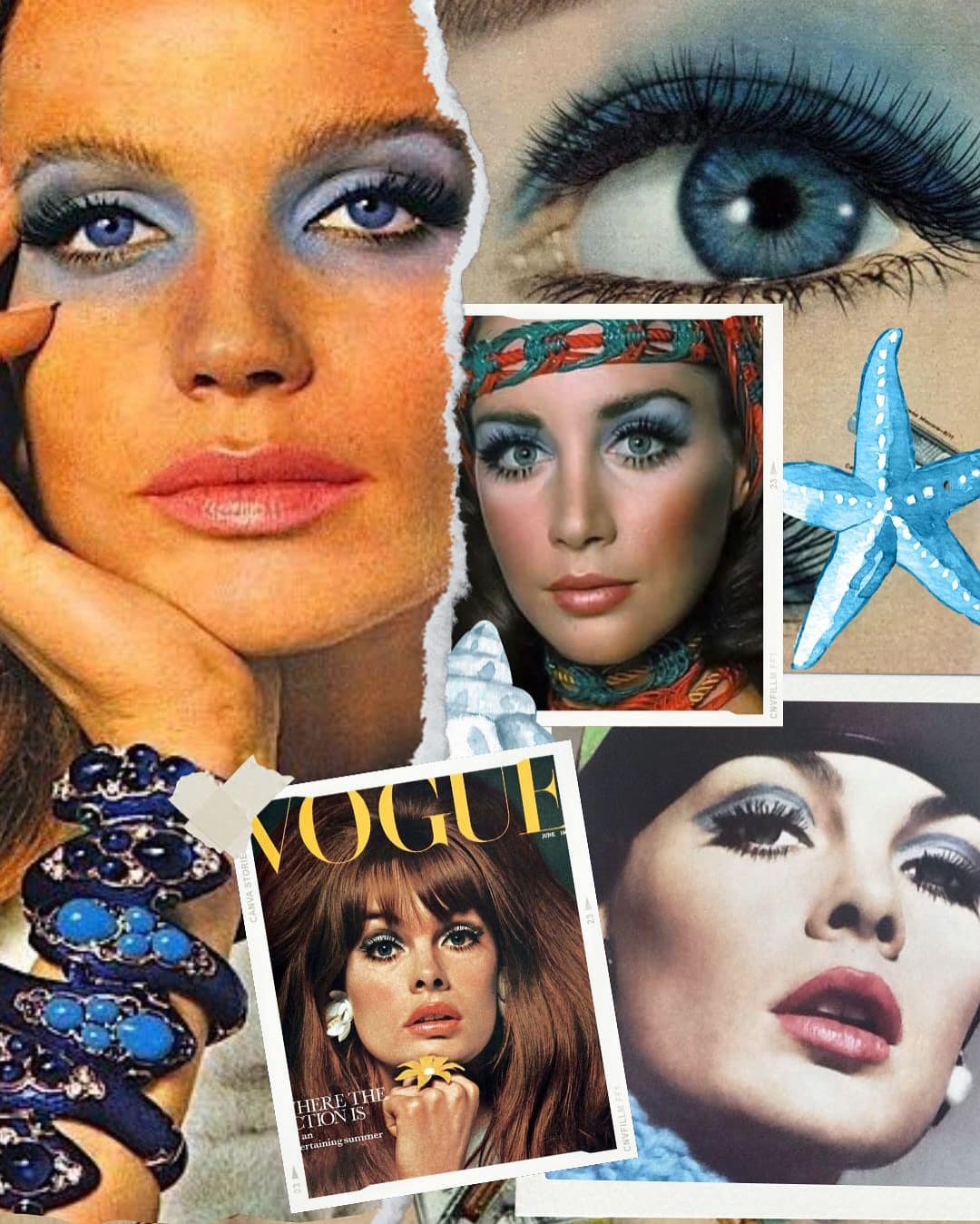
In the ’70s, the mood loosened. Blue picked up more shimmer, more nightlife, more stage light. It felt less graphic then, more atmospheric, more touched by glamour. You can almost see the low light, the satin, the movement.
@70sworship
@virgocrave
By the ’80s, restraint had mostly left the frame. Blue turned louder, brighter, more electric. It no longer seemed interested in looking tasteful in a quiet way. It wanted impact. The eye became bolder, more obvious, more unapologetic.
@retro.shauny
@cyndi_lauper_fans
Then the late ’90s and early 2000s gave blue the version that still sticks hardest. Frosted, glossy, pop, a little synthetic in a way that still feels easy to picture now. For a lot of people, this is still the blue that comes back first — shiny, cool-toned, instantly tied to one very particular beauty moment.
@glitter2ks
Blue is a good color to watch for exactly that reason. Safer shades can slip back in without much resistance. Blue almost never can. And if you are looking for a color that shows you when taste is starting to move, this is usually a good one.
What Makes Blue Look Different Now
What makes blue feel current again is the way this softer blue eyeshadow sits on the face. It no longer lands like a reference first and a color second. It feels quieter now. Less locked into one old beauty script. More willing to stay part of the look instead of trying to become the whole thing.
You can feel that change straight away. Blue used to come in with more certainty than that. Once it was there, it tended to pull everything toward itself. This version does not push so hard. It feels calmer. Less theatrical. Less eager to prove it belongs to one specific beauty era. The color is still visible, of course, but it no longer arrives carrying the whole performance on its back.
@viseart
@chloemorello
Makeup artists are talking about it that way too. In an interview with Harper’s Bazaar, celebrity makeup artist Lilly Keys said today’s blue is “less the heavy frosted blue of the early 2000s and more softer washes of color, denim tones, or a pop of blue liner,” pointing to a version of the shade that no longer needs a full glossy lid to be noticed. [1]
Now blue can sit close to the lashes, pass lightly over the lid, or come through as a cooler cast across the eye instead of one fixed, obvious statement. It still catches attention. But now it gives the face something more interesting than straight retro recognition. It gives it tone.
Celebrities That Changed the Mood Around Blue
A color starts to feel new again when the right faces take some of the old weight off it. Blue needed that. It had spent too long arriving with too much memory already attached.
On Zendaya, it does not look nostalgic at all. It looks clean, deliberate, almost freshly cut against the rest of the face. The color is still strong, but it does not fall into that old frosted script people remember first. It reads like a present-tense choice. Not a throwback. Not a joke. Just blue, worn with enough certainty to stop feeling explanatory.
Long-Term Implications

On Devon Lee Carlson, it loosens. The shade turns lighter there, less fixed, less determined to make itself the whole point. It feels as if it just passed over the eye and stayed for a second. That changes the whole feel of it. A color with this much history usually arrives all at once. On her, it barely seems to press down at all.

With Zara Larsson, the mood around it changes again. Not because she gives the neatest blue example every time, but because she makes bright eye makeup feel socially alive again. Around her, visible color stops looking like something kept for editorials or old music videos. It starts to look public again. Pop again. Something that can stay bright without automatically turning into a costume.

What changes most is the way blue looks on each of them. It does not stay fixed. On one it feels cleaner. On another, lighter. By then, it no longer looks like a preserved beauty reference. It starts to feel current again.
What the Return of Blue Is Really Telling Us
Some makeup looks fade with their decade. Blue almost never does. It slips out of favor, then turns up again where someone has gone looking for it. In an old film still. In a magazine page saved for years. In the kind of face people still want to borrow for a moment, even when the decade around it is long gone. That is part of why blue never really loses its charge. People do not just remember it. They keep wanting to see what it does on a face again.
You can feel that in the way retro blue makeup keeps coming back through recreations. Not only on celebrities, but on beauty creators, bloggers, ordinary faces testing an older image against the present and finding that it still holds. The decade changes. The finish changes. The face changes. But the pull stays there. Blue still offers something neutral makeup usually does not, a little more image, a little more stylization, a little more nerve.
@ellieloveux
@lyric_sherade
@beautybysajaa
Maybe that is also why blue never really learned how to behave quietly. Diana Vreeland, the fashion editor who helped define the image world of Harper’s Bazaar and Vogue, once said, “A little bad taste is like a nice splash of paprika.” Blue has always had that paprika quality. A little too charged. A little too full of history. Never quite willing to stay in the background.
And maybe that is why it keeps returning. Not because it is safe, and not because it is timeless in some polished way. It returns because people still want what it does to the face. A little interruption. A little image. A little more sense that makeup can still change the air around you. Blue may never become fully neutral. That is probably the point.
Sources:
Emily Hart
Discover with Vireon Press

The Drainage Routine: How to Reduce Face Puffiness

How to Get Cloud Skin: The Soft-Focus Formula for Blurring Pores
The Soap Nails Trend: How to Recreate the Look at Home