We Know Everything. It’s Making Us Tired.
-
 By
Emily Hart
By
Emily Hart
- Culture
- 6 min read
-
By
Emily Hart
- Culture
- 6 min read
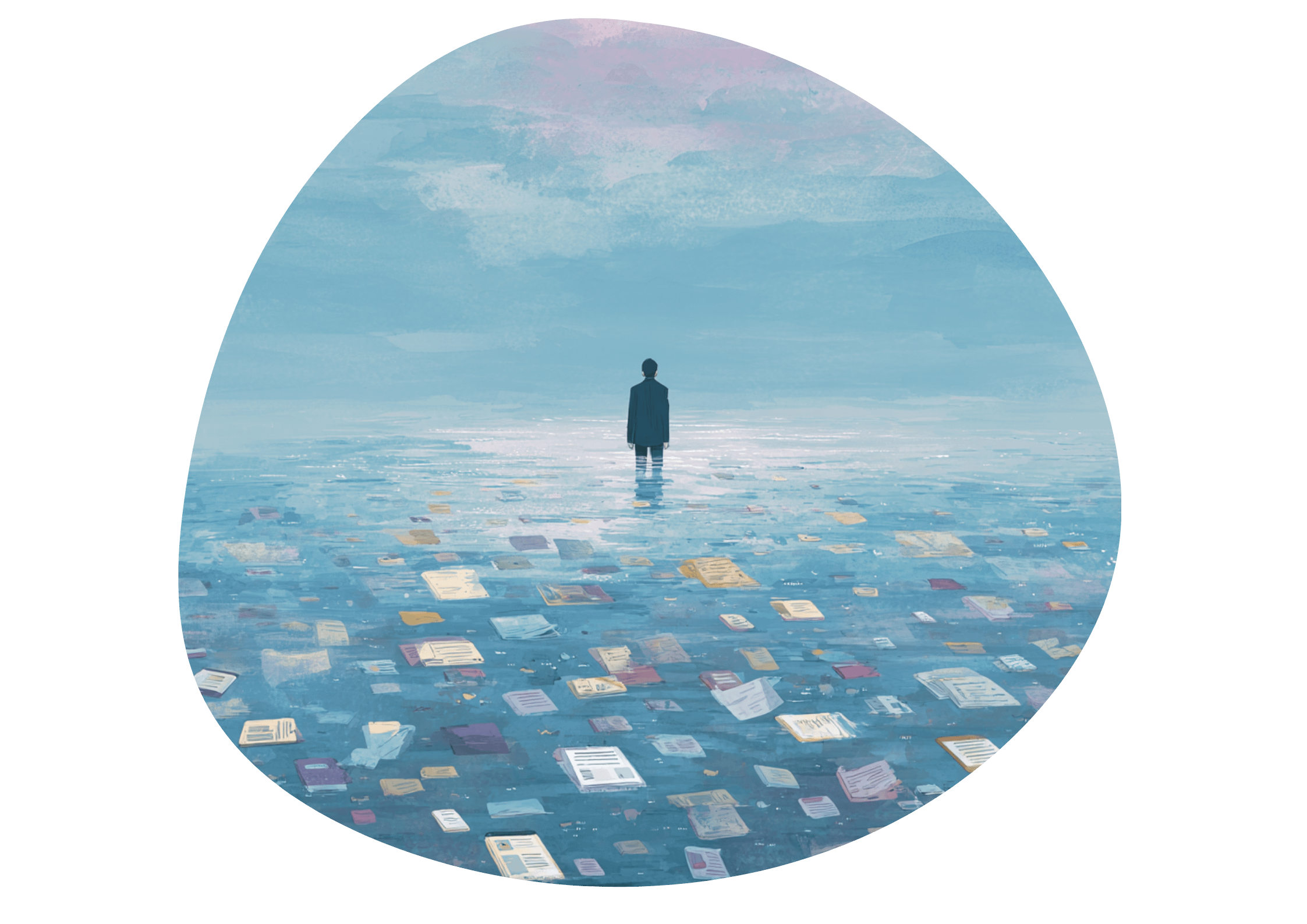
Knowledge has mutated from empowerment into a form of psychological overload. Information now dominates our brains, leaving no room for silence.
When Being Informed Stopped Feeling Empowering
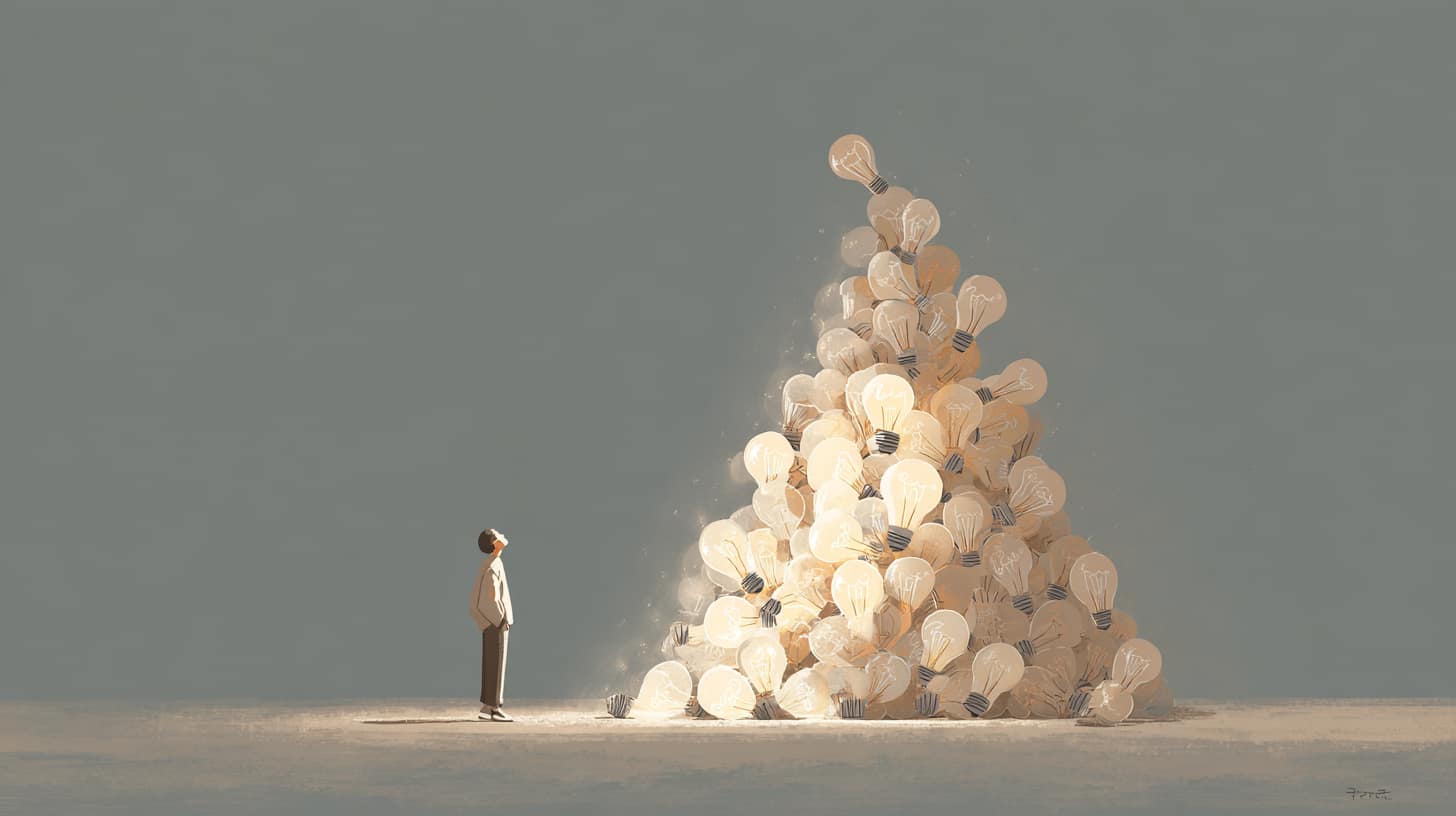
Historically, information was synonymous with agency, that is, the ability of subjects to consciously influence their own lives. During the Enlightenment, knowledge was considered the primary tool for combating tyranny and uncertainty. As Francis Bacon noted in his work Meditationes Sacrae, “knowledge itself is power” [1]. Indeed, in those days, obtaining fresh information meant gaining control over social processes and personal safety.
The turning point occurred when the volume of incoming data exceeded the bandwidth of human attention. The theory of cognitive overload, popularized by Bertram Gross [2], proposed that an excess of facts doesn’t help decision-making, but rather paralyzes it. Here’s how this promise was broken:
- Trust erosion. When there are too many sources, information ceases to confirm reality and begins to blur it. The concept of post-truth describes a situation where objective facts are less influential in shaping public opinion than appeals to emotions.
- Paralysis instead of action. Awareness no longer brings clarity – for example, today, we know more about melting glaciers than ever before, but this knowledge doesn’t generate a plan of action, but rather anxiety about the future of our planet and, as a result, a feeling of helplessness.
|
Feature
|
The Age of Limited Information (20th century)
|
The Age of Informational Overload (21st century)
|
|---|---|---|
|
Availability
|
Portion-based (newspapers, TV)
|
Total (push notifications, 24/7)
|
|
Purpose of consumption
|
Opinion-building and planning
|
Engagement maintenance
|
|
Limits
|
Clear (the end of the newspaper/magazine issue)
|
None (infinite scrolling)
|
|
Effect
|
A sense of control
|
Anxiety and information overload
|
|
Result
|
Clarity
|
Informational noise
|
The Economics of Constant Awareness
Modern knowledge fatigue is the result of the attention economy culture. This concept, coined by Nobel laureate Herbert Simon in 1971, posits that information wealth creates attention poverty, so in a world where attention is monetized, media systems can no longer afford to remain silent [3]. In terms of information overload culture, this silence is unprofitable for a number of reasons:
- Dictatorship of algorithms. As Shoshana Zuboff argues in her book “The Age of Surveillance Capitalism”, social platform algorithms form constant connectivity to the internet. They are tuned to maximize online time using a variable-ratio schedule, whereby each feed update is an attempt to win a new portion of affective information (like slot machines) [4].
- Incentives for radicalization. Often, fake news and radical content spread many times faster than truthful data, creating a system where media outlets are forced to constantly increase the shock value just to remain visible.
- Endless updates. The disappearance of the end-of-page button and the introduction of infinite scrolling have led people to media overconsumption. Information is presented as a continuous river, and exiting it is subconsciously perceived as a risk of missing something crucial.
News Without End

The disappearance of pauses has deprived us of time for reflection. When one shocking event is instantly displaced by another in our feed, the emotional response inevitably dulls. We no longer experience the event, but merely register its presence with a brief pulse of anxiety before swiping up. As a result, the value of each individual fact approaches zero due to their excessive number, and reality begins to be perceived as white noise.
We lose the ability for deep empathy and analysis, as the intensity of delivery and the speed of updates replace the depth of content. Our attention becomes locked in a state where there is no room for the past (which will be forgotten in an hour) or the future (which is frightening in its unpredictability).
Anxiety as a Side Effect of Information
Modern awareness comes into conflict with true understanding. We are experiencing the phenomenon of cognitive overload, when the volume of data exceeds the brain’s ability to organize it. As psychologist Barry Schwartz notes, this leads to an overabundance of choices and, consequently, mental fatigue [5].
We do know thousands of facts about global threats, but this knowledge isn’t being converted into a specific action plan, leading us to chronic anxiety and so-called information stress: the brain constantly scans the horizon for threats, but due to a lack of pauses, it can’t switch to rest mode. In this system, awareness becomes a harmful factor, maintaining high cortisol levels.
Selective Ignorance as Self-Preservation

In response to the aggressive information environment and digital news fatigue, we should change our news consumption habits and follow a new strategy called selective ignoring. Indeed, today, many people consciously adopt an information diet by limiting screen time and reducing the number of information sources. This behavior becomes a biological survival mechanism, aimed at restoring mental resources and gaining control over our attention.
As Nicholas Carr writes in The Shallows, our brains are literally rewired by the internet, losing the ability to concentrate deeply [6]. Therefore, selective ignoring becomes an attempt to be against the always-on culture and protect our cognitive sovereignty in a world where information strives to fill every second of our existence.
Conclusion
We have witnessed how the accessibility of knowledge has robbed us of inner silence. Being informed can no longer help to control the world; instead, it has brought us to cultural exhaustion.
Perhaps the main challenge of the future lies not in finding new ways to transmit data, but in limiting it, to restore people’s right to their own, quiet, and autonomous space.
Sources:
[3] Lost In The Scroll: The Hidden Impact Of The Attention Economy
[4] Viewpoint: The Velvet Prison
[5] Why do we have a harder time choosing when we have more options?
[6] 1.6. Review of What the Internet Is Doing to Our Brains: The Shallows, by Nicholas Carr

Emily Hart
writes about beauty and celebrity culture for Vireon Press, tracking how trends evolve across fashion, media, and public life.
Discover with Vireon Press

Parasocial Relationships in the Age of Influencers

Minimalist Lifestyle: Simplicity as a Form of Control