Overconsumption: A Modern Habit With a Real World Cost
-
 By
Emily Hart
By
Emily Hart
- Culture
- 9 min read
-
By
Emily Hart
- Culture
- 9 min read
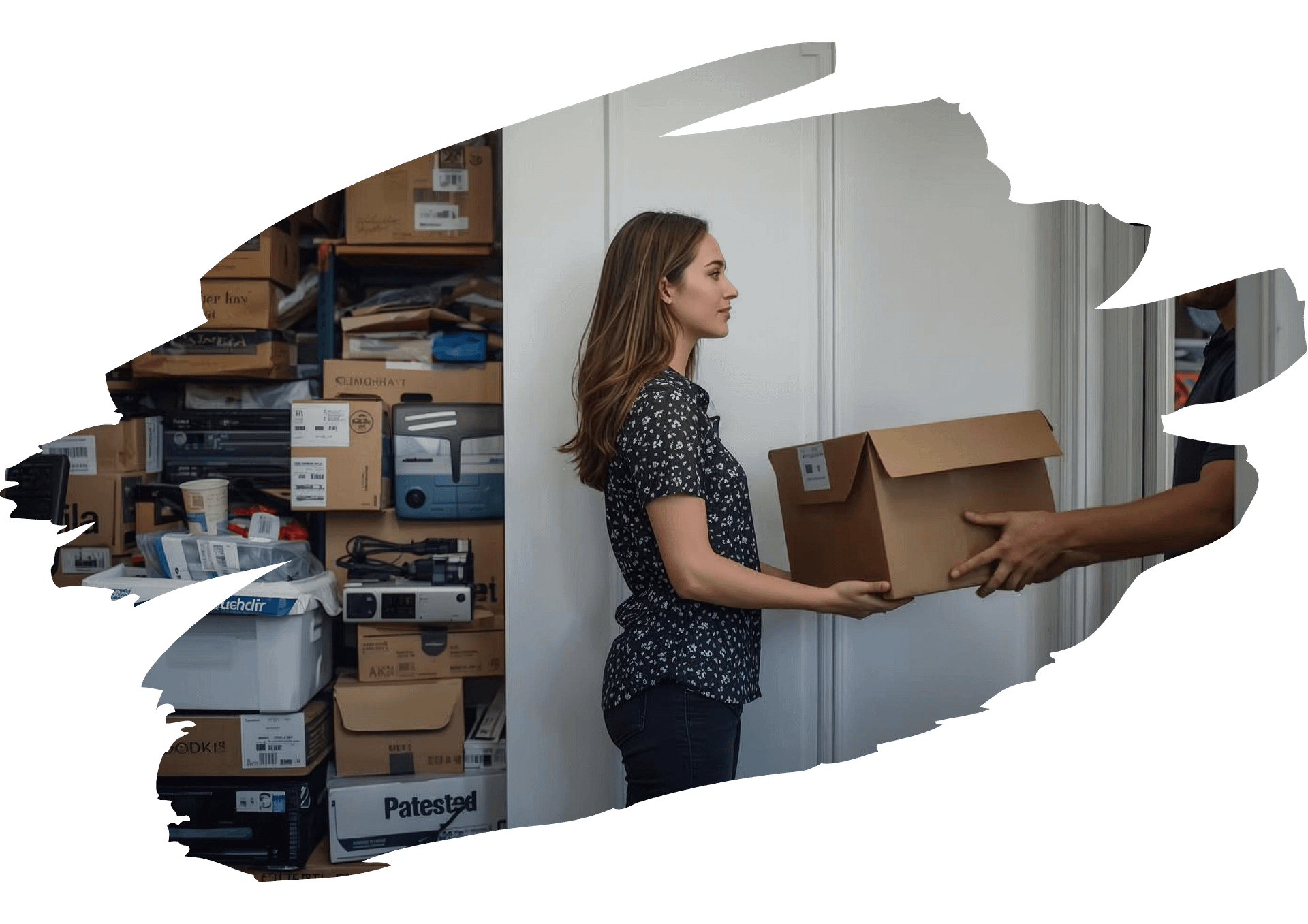
Algorithms, same-day delivery, and a convenience culture have made our desire to buy a habit. The outcome is predictable: more stuff, less satisfaction. And, strangely enough, a sense of emptiness. Not always noticeable, but steadily growing.
Because the cost isn’t only personal. It is also physical: plastic waste, textile waste, e-waste, and the “cost” of landfills that serve mass production, continuously supplying the “new.” Consumer culture is gradually speeding up, and the earth is no longer capable of keeping up.
The Age of Overconsumption Culture

When Marketing Moves Into the Feed
Overconsumption wasn’t something that came in as a sudden change, but rather as a slow progression. Algorithms have learned to recognize our preferences and what “catches the eye.” Social media feeds have become a constant stream of advertising offers, with countless “recommendations” from bloggers and influencers presented gently, similar to personal guidance. The message is unambiguous: don’t think, just tap. In today’s consumer culture, marketing is no longer just an “ad break”. It’s folded into the feed.
The Dopamine Loop Behind “One More”
The term “dopamine hit” refers to a brief surge of motivation and pleasure associated with dopamine, a brain chemical involved in reward learning and the desire to repeat an action.
The main idea is that dopamine typically reacts more to anticipation than possession. The most significant “hit” may occur in the lead-up: browsing, selecting, adding to cart, picturing how it will feel, and waiting for delivery. Once the thing arrives and becomes familiar, the novelty immediately disappears. As a result, the brain begins to search for the next trigger that will elicit that emotion. In a world of constant offers, sales, and new releases, this reward loop transforms shopping from a choice to a reflex.
When Novelty Becomes the Default
That’s exactly how convenience culture changes our behavior. Shopping becomes a background activity. Something you do on a coffee break, on the way somewhere, scrolling in bed before falling asleep. And when buying takes no effort, “one more” turns into a pattern. It’s not that people suddenly became more materialistic. It’s that the system made “more” as easy as possible.
Culture Effect
The cultural effect is subtle, but massive: novelty stops being an event and becomes the new norm. Purchases no longer feel like “big moment”. They’re simply expected. One more restock, one more replacement, one more upgrade. And somewhere along the way, the very meaning of the word “new” begins to blur.
When More No Longer Feels Like More

Saturation Psychology
“More” has been a word of progress for a time now. A new item can represent a feeling, a moment, a reward. However, “more” in this overconsumption culture doesn’t have the same impact. When purchasing becomes routine, it loses emotional meaning.
That’s the quiet psychology of saturation. If your baseline is literally endless choice, satisfaction becomes harder to reach.
Luxury in the Same Fast Cycle
Even the way we perceive “luxury” has changed. It used to be associated with inaccessibility and exclusivity.
Now, it moves in rhythm with everything else. Luxury brands still rely on craftsmanship, status, and quality. However, they’re also caught up in the race for speed. New collections are launched more regularly, and advertising becomes more conspicuous in order to keep up with trend cycles that never stop producing the “new.” The aesthetic is endlessly re-packaged through styling references, “how to recreate the look” roundups, and feeds deliberately designed to refresh faster than taste can settle.
As a result, meaning flattens out, and luxury starts to seem like another category of goods, only more expensive. The “rare” becomes recognizable. The “special” becomes ordinary.
The Upgrade Treadmill
Purchases continue to rise under the subtle push to be “current.” People are constantly being pushed to make tiny but never-ending updates. And here’s the strange part of all: overconsumption promises satisfaction, but often only makes things more complicated.
More options bring less clarity. More purchases bring less impact. Not because people don’t know what they like, but because the pace leaves almost no space to actually feel it.
The Waste We Don’t See

We tend to think of overconsumption happening only at the checkout – but actually, it goes on happening quietly beyond the “unboxing high.” This is so because the “too much” isn’t just a frame of mind. It becomes physical.
One of the most vivid signals is the amount of stuff we waste. The World Bank’s What a Waste 2.0 estimates that the world generated about 2.01 billion tonnes of municipal solid waste (2016) and projects this could rise to about 3.40 billion tonnes by 2050 [1]. That number is easy to read but hard to imagine, because most of this waste is kept out of sight.
Plastic Waste: The Signature Of The Convenience Era
Plastic is the signature material of the era of “convenience”: light, cheap, ubiquitous, and, for the planet, dishearteningly long-lived.
And the problem isn’t plastic itself. It’s how it is irresistibly convenient in consumer culture. Producing it, using it once, and replacing it takes almost no effort. OECD-linked projections warn that without strong policy action, plastic waste is on track to rise sharply by mid-century. [2] The “new” keeps coming, and the leftovers don’t go anywhere.

E-waste: Upgrades As A Global Pile
Electronics are the literal meaning of the term “one more upgrade”. The latest Global E-waste Monitor figures, summarized by ITU and reported by Financial Times, the global figure for electronics discarded reached a new record of around 62 million tonnes in 2022, of which only 22 percent were recycled in an appropriate manner. [3]
That is the missing picture—a kind of “hidden afterimage of overconsumption,” the hidden impacts of overconsumption. We see the launches and the pristine product photos, but not the downstream effects of the waste that comes later.
Textile Waste As "Cheap Newness" In A Landscape
If you want one image that makes the abstract feel physical, look at Chile’s Atacama Desert. It’s one of those places where the consequences of fast fashion stop being theoretical — you can literally see them. In 2023, The Guardian wrote about how discarded clothing ends up there, turning “cheap newness” into a literal landscape.[4][5]
It is the perfect case to study. And not because it has to do with fabric particularly, but because it’s one about tempo-how fast we are trained to want, to buy, and then to move along.
Fashion’s Emissions And The Polyester Problem
In texts concerned about how fashion affects the environment, writers often return to synthetic textiles and the endless “newness” created by constant drops. The most often mentioned material in this context is polyester. The fact is, polyester is plastic. And plastic is made from petroleum-based derivatives. As such, fashion is inextricably linked to the oil-based economic model in both production and consumption.
That link also shows up in emissions. The Wall Street Journal has pointed to research suggesting that fashion’s emissions are being driven up by the virgin polyester industry’s reliance. [5] And the environmental story doesn’t end at the factory. Synthetic fibers, especially during wash cycles, shed microplastics that travel through wastewater and into waterways. Add blended fabrics to the mix (polyester + cotton, polyester + elastane), and meaningful recycling becomes extremely difficult.
Normality Of The Aftermath
What’s unsettling about these realities is how normal they feel, and how rapidly they turn into consumer waste.
However, it is not the consequence of a small group of extreme consumers. It’s the logical outcome of a system engineered to ensure there is always an endless supply of “more,” faster, cheaper, and more, while the price is paid elsewhere.
The Backlash and the New Language of Choice

Less, Better, Longer
Right now, we can see a broader tendency toward stepping back from overconsumption. Quiet changes in behavior and taste that show a rising desire for stability and durability. However, these changes are still not widely accepted. They are currently more noticeable among eco-activists and those who already prioritize sustainable practices and long-term choices. That includes the visible rise of secondhand culture and the return of repair culture. Not as perfect solutions and not as a new kind of “purity,” but as a way to bring pause and intention back into a system that made “one more” feel nearly natural. And it’s simple to wish that this trend continues to grow.
This is why “buy less but better” keeps coming up. Why do people fix rather than replace? Why does renting and resale feel normal again? Why would some people rather spend on a meal, a trip, a class, a memory, rather than another thing that will be stored and sorted and trashed eventually? The point isn’t to idealize minimalism. It’s to acknowledge what the last decade taught us: it may be easy to accumulate, but it’s harder to live with.
New Questions We Ask Ourselves
The language around desire is changing. We’re becoming more specific in questions that once seemed unnecessary:
Do I want this, or was I pushed towards it? Will it last, or will it end up in the trash heap in a week? Does it bring something new, or just bulk?
In this way, awareness isn’t a value position. In a world with countless possibilities, it’s a survival strategy.
Honest Conclusion
The most honest conclusion? It`s not that “everything is bad”. It’s that many people are trying to find meaning for themselves by choosing intentionally. Not because they’re not susceptible to wanting, but because the environmental impact of “more” is no longer abstract.
Consumption will continue, and the future will depend on us and how we redefine valuable, enough, and what we actually want to bring forward.
Sources:
[1] World Bank, What a Waste 2.0: A Global Snapshot of Solid Waste Management to 2050.
[2] OECD (2022), Global Plastics Outlook: Policy Scenarios to 2060 (PDF)
[3] UNITAR / ITU, Global E-waste Monitor 2024 (press release / summary page).
[5] YouTube, “The fast fashion graveyard in Chile’s Atacama Desert” (BBC News, 2022).

Emily Hart
writes about beauty and celebrity culture for Vireon Press, tracking how trends evolve across fashion, media, and public life.
Discover with Vireon Press

Parasocial Relationships in the Age of Influencers

Minimalist Lifestyle: Simplicity as a Form of Control