How to Layer Skincare Under Makeup Without Pilling

VireonPress Editorial is the publication’s collective voice. We cover business, technology, culture, and beauty with a focus on trends, systems, and the ideas quietly shaping everyday life.
You spend ten minutes at the mirror. Your skin looks radiant. Then you start blending foundation or SPF, and suddenly little grey crumbs appear under your fingers, dragging the whole finish with them. It’s incredibly frustrating, but the problem is rarely one bad formula.
Knowing how to layer skincare under makeup correctly is less about owning more products and more about texture, timing, and how much your skin can actually hold. When those layers don’t settle, even the best serum can turn into something your face starts to shed.
The Weight Rule: From Water to Oil
To keep products from rolling up, start with the lightest texture and move toward the richest one. Your skincare routine order should feel like this:
1. Watery first: mist, toner, essence
2. Light slip next: watery serum, vitamin C, niacinamide
3. Cushion layer: gel serum, light lotion
4. Seal last: cream, facial oil, SPF
Watery first → Light slip next → Cushion layer → Seal last
It sounds basic, but this is where many routines go wrong. A rich cream applied too early can leave a soft film on the skin. Anything watery placed over it has nowhere comfortable to go. Instead of settling, it stays on the surface, mixing with the layer underneath until the whole thing starts to roll under your fingers.
The 60-Second Setting Window
A routine can pill simply because you move too fast. Four layers in one minute might feel efficient, but on the skin, they start fighting for space. Each serum needs a brief pause before the next one goes on.
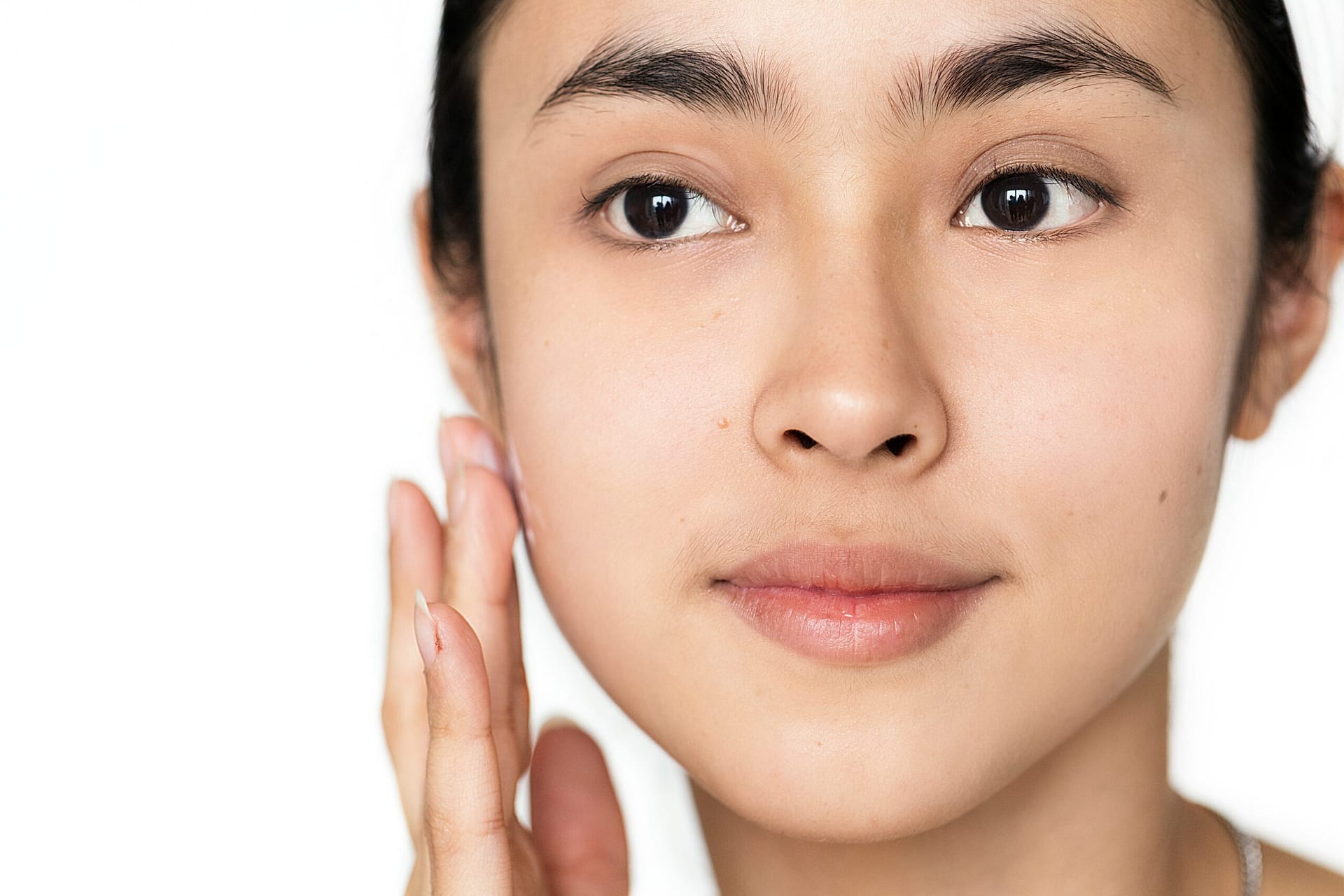
You don’t have to wait forever. Give each layer about 60 seconds, then use touch as your marker. The skin should feel slightly cool, bouncy, and lightly damp, but not wet, sticky, or slippery. If a product is still moving under your fingers, it hasn’t settled yet. Add another layer too soon, and you are just pushing the first one around.
The Hyaluronic Acid Trap
Hyaluronic acid sounds harmless. Watery, plumping, easy. And it is until there is too much of it sitting on dry skin.
Because it holds water near the surface, the texture can turn tacky if it has nothing to bind with. Not always in an obvious way. Sometimes the face just feels a little tight, a little shiny, a little too smooth. Then SPF goes on, or foundation, or even another serum, and that invisible layer starts to lift.
That is usually the flaking people blame on makeup.
Applying hyaluronic acid safely is mostly about timing. Use it on slightly damp skin, press it in with your palms, and seal it with a light cream before it dries down into a film. It should feel cushioned, not gummy.
The palette moves away from dense black and hard carbon lines. This version sits closer to natural shadows: raw espresso, deep taupe, bruised brown, cool slate, a faint burgundy haze. These tones feel softer than old grunge because they don’t sit on top as a graphic layer. They look like depth, warmth, tiredness, a little weather.
Espresso smoke stays close to the lashes, then loses its edge outward. The shape is not a wing, not a stamped block, not a perfect smoky eye. It looks better when the border is slightly eroded, as if softened by skin. That vignette makes the eye feel lived-in rather than heavy.
Chemical Friction: Silicones and Acrylic Polymers
Silicones like dimethicone are not the villain. They give formulas that smooth, velvety slip and help moisture stay put. The issue is placement. Some silicone-heavy serums, primers, and gel creams sit partly on the surface, especially when they are built with film-formers or gel agents like carbomer.
That film can look beautiful when you leave it alone. It gives grip, blur, and that soft-focus effect — the same skin-first softness behind the wider Blurred Beauty & Soft Glam mood. But start rubbing SPF or foundation over it too hard, and the layer can ball up. The same thing happens when a morning routine gets too crowded. A vitamin C and niacinamide layer can be fine, but not when it becomes three actives, a gel cream, and makeup all applied before your morning coffee.
Quick Fixes: Damage Control
If the pilling has already started, the first instinct is to scrub your face and start from zero. Don’t. You can often save the application by treating the texture rather than attacking it.
For loose crumbs: Take a large, dry, fluffy makeup brush. Sweep it very lightly over the skin so the tips of the bristles lift the flakes away. No pressure, no rubbing.
For dry, stuck patches: Mist the area with a hydrating spray and wait a few seconds. Instead of blending, press a damp sponge over the spot to re-anchor the product.
The SPF layer next: Once the texture is calm, apply your sunscreen. Give it a few clear minutes to completely fuse with the skin and lock onto the stable serums below before moving on.
The foundation last: Only after that protective barrier is fully set should you start patting on your foundation. This brief pause ensures your makeup sits completely flat without dragging the shield with it.
Before you give up and head back to the sink, watch how this recovery technique works in real-time. In the video below, pay attention to the minimal pressure used during the misting stage and the exact padding motions with the sponge that re-anchor the layers without creating a single new flake.
The Summer Layering Rule
Summer is not the best season for a crowded routine. Heat and humidity make every extra layer more noticeable, especially once makeup goes on. This is where less really does work better: one good serum, enough time, and a cream that doesn’t fight what came before it. The skin looks smoother when the routine has room to settle.
VireonPress Editorial is the publication’s collective voice. We cover business, technology, culture, and beauty with a focus on trends, systems, and the ideas quietly shaping everyday life.
How to Do the Scalp Reset Method Without Drying Out Your Hair



The Drainage Routine: How to Reduce Face Puffiness

How to Get Cloud Skin: The Soft-Focus Formula for Blurring Pores
The Soap Nails Trend: How to Recreate the Look at Home
Advertisement