When Choice Stops Feeling Like Freedom
-
 By
VireonPress Editorial
By
VireonPress Editorial
- Opinion
- 5 min read
-
By
VireonPress Editorial
- Opinion
- 5 min read
When More Became the Default
Just half a century ago, consumer selection was limited by geography and production capabilities, but today, it has transformed from a privilege into background noise. We are experiencing firsthand what psychologist Barry Schwartz calls the tyranny of choice [1].
Take a trivial example: buying jeans. While we used to choose from two or three styles, today online retailers’ algorithms offer endless options, varying on hundreds of parameters.
This shift, known as the transition from good enough to the search for the perfect, subtly leads to decision fatigue. Indeed, when there are too many options, instead of choosing an item as a whole, we begin to select its individual criteria, turning a simple action into a complex analytical process.
Thus, redundancy has become the default setting of reality, where the absence of alternatives is perceived as a systemic failure, although in practice it’s precisely this failure that brings peace.
From Freedom to Responsibility
When the selection was limited, we could blame circumstances or fate. When it has become limitless, we can only blame ourselves.
For example, a study by psychologists Sheena Iyengar and Mark Lepper clearly demonstrated this mechanism [2]. Shoppers offered 24 varieties of jam showed great interest, but purchased the product 10 times less often than those offered only six varieties, simply because the responsibility of choosing one of the 24 was too great, and the fear of missing out on the best one paralyzed their will. You’ll agree – today, we expend more mental energy on the curated choice process itself than we enjoy the outcome. Perceived freedom now lies in proper risk management.
The Illusion of Control
The problem with 21st-century society is that the selection space is rigidly defined by algorithmic boundaries. We’re confronted with a phenomenon that researchers call choice architecture, a term coined by Richard Thaler and Cass Sunstein in their work “Nudge” [3].
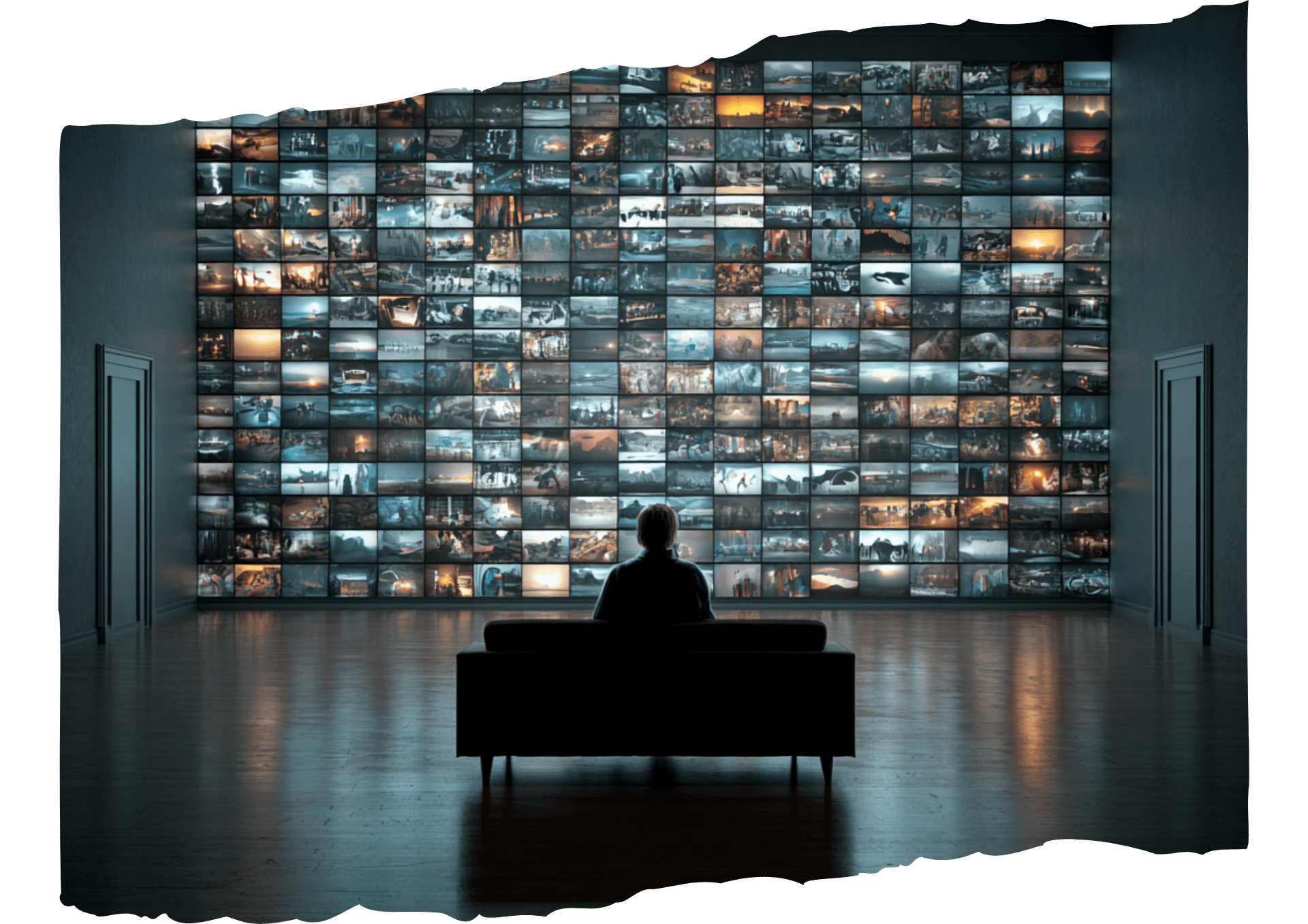
The algorithms of social media and streaming platforms create so-called filter bubbles, a concept popularized by Eli Pariser [4]. We think we’re selecting content from an endless ocean of information, but in reality, we’re choosing from a narrow selection based on our past preferences. Specifically, consumers feel like active agents when they click Next or Like, yet they’re simultaneously deprived of the opportunity to step outside the preset script. This is confirmed by streaming services like Netflix and Spotify. Users spend an average of 10 to 20 minutes choosing a movie. The system offers an endless list, but 80% of Netflix viewing is generated through the recommendation system, so, ultimately, we choose not what we want, but the best of what’s offered. Moreover, in some cases, this offer benefits advertisers rather than the consumer.
This leads to a simple conclusion: a modern consumer choice becomes a tool not for liberation, but for retention. We become consumed with making small decisions, which depletes our cognitive resources and leaves us unable to critically evaluate the choice architecture in which we’re trapped.
Why Fewer Options Often Feel Better
In today’s context, avoiding redundancy is becoming a rational strategy for psychological hygiene. Research shows that an abundance of fatigue leads to decision paralysis and subsequent post-decision regret [5].
Psychologist Barry Schwartz, in his work “The Paradox of Choice”, argues that maximizers (people who strive to choose the best option from all possible ones) feel significantly less happy than satisficers (those who choose the first option that meets their basic criteria) [6]. When the number of options is reduced, the brain switches from comparison and evaluation mode to dwelling and experiencing mode. Let’s consider these examples:
- The capsule wardrobe concept. This isn’t a fashion trend at all, but rather a mental decompression strategy. Reducing your wardrobe to 10-15 basic items radically excludes cognitive overload, freeing up brain resources for more practical and complex tasks.
- The retail strategy of Aldi and Trader Joe’s. Unlike giant supermarkets with 100,000 items, these brands offer a limited selection (for example, only two types of ketchup instead of 40). Thus, not having to compare dozens of identical products relieves background anxiety [7].
- Digital detox. The popularity of apps that block internet access or limit smartphone functionality to dumbphone levels confirms the theory: we seek relief precisely within rigid constraints.
Thus, the freedom of choice is a direct biological response to choice overload. As neuroscientist Daniel Levitin notes in his book “The Organized Mind”, our brain processes more information in a day than a 19th-century person processed in a lifetime [8]. In this context, “less” becomes the only way to maintain depth of perception.
Conclusion
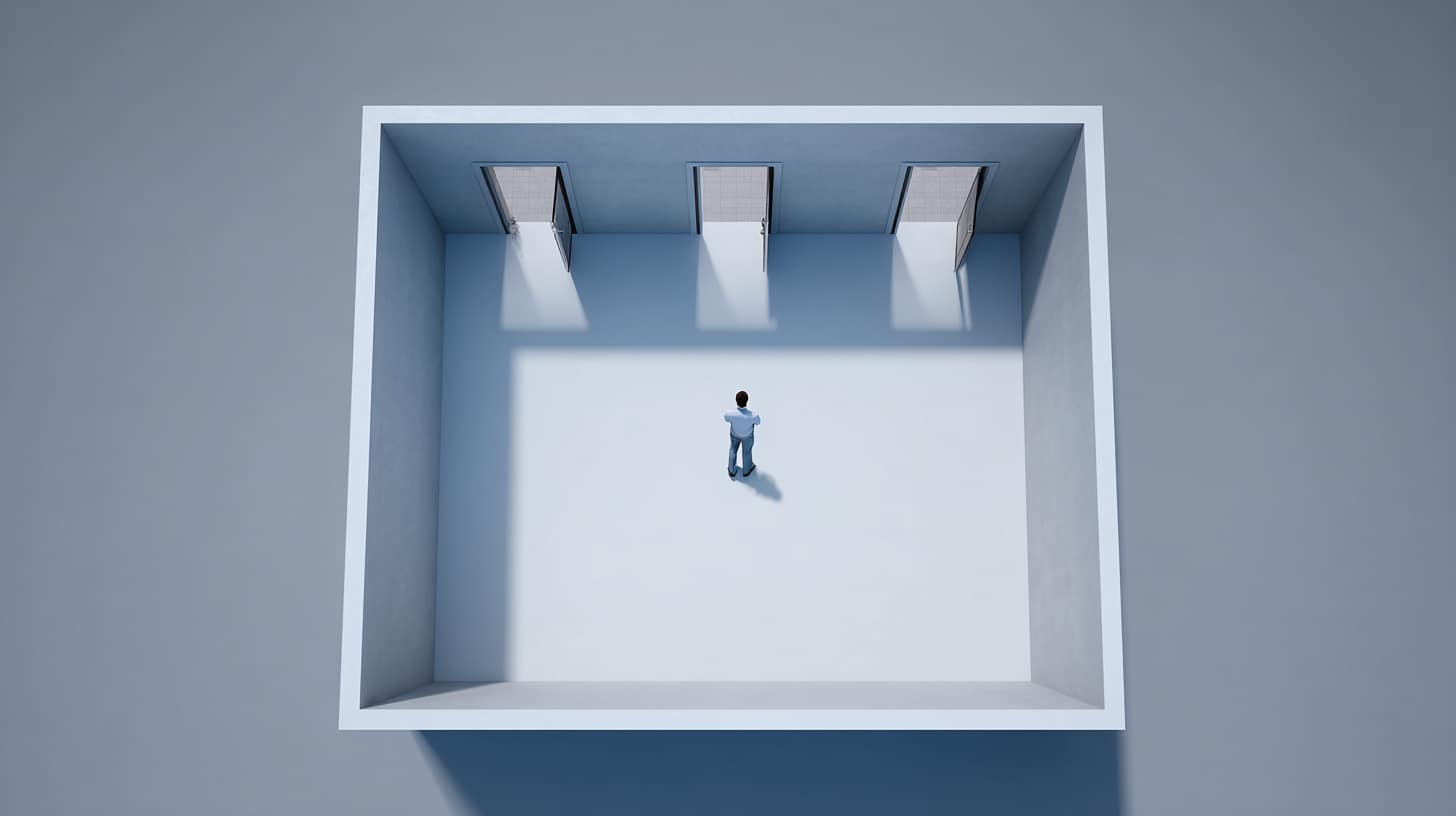
If we spend our entire lives in the hallway, agonizing over which handle to grasp, we remain captive to the selection itself. True freedom lies not in too many choices – it lies in clarity of purpose. We obtain consumer autonomy not when we can choose anything, but when we know exactly what we need and have the courage to ignore everything else.
Sources:
[2] When Choice is Demotivating: Can One Desire Too Much of a Good Thing?
[5] C1 Advanced (CAE) – Reading Multiple Choice 7
[6] Book The Paradox of Choice
VireonPress Editorial
Discover with Vireon Press

Work Life Balance: Why It Feels Harder Than Ever

Data Privacy Is the New Brand Promise

Parasocial Relationships in the Age of Influencers